Eye on Louisiana’s Slave History
My roots run deep in Louisiana soil. Born and raised here, I’ll be buried here. Its cultural and ethnic history colors who I am – Black, Catholic, American and Creole. This melding of Africa, Europe, the Caribbean, and native peoples indisputably defines southern Louisiana. Culturally, it is unlike any other region in the States with its Creole and Cajun cuisine, its music of jazz and zydeco and its festive Mardi Gras when the good times roll prior to the forty days of Lenten fasting and penance.
Yes, there is much to celebrate about Louisiana. But like other southern states, it has a dark and shameful past anchored in slavery. Melanie and I were reminded of that past with a visit to the Whitney Plantation along the famed River Road, 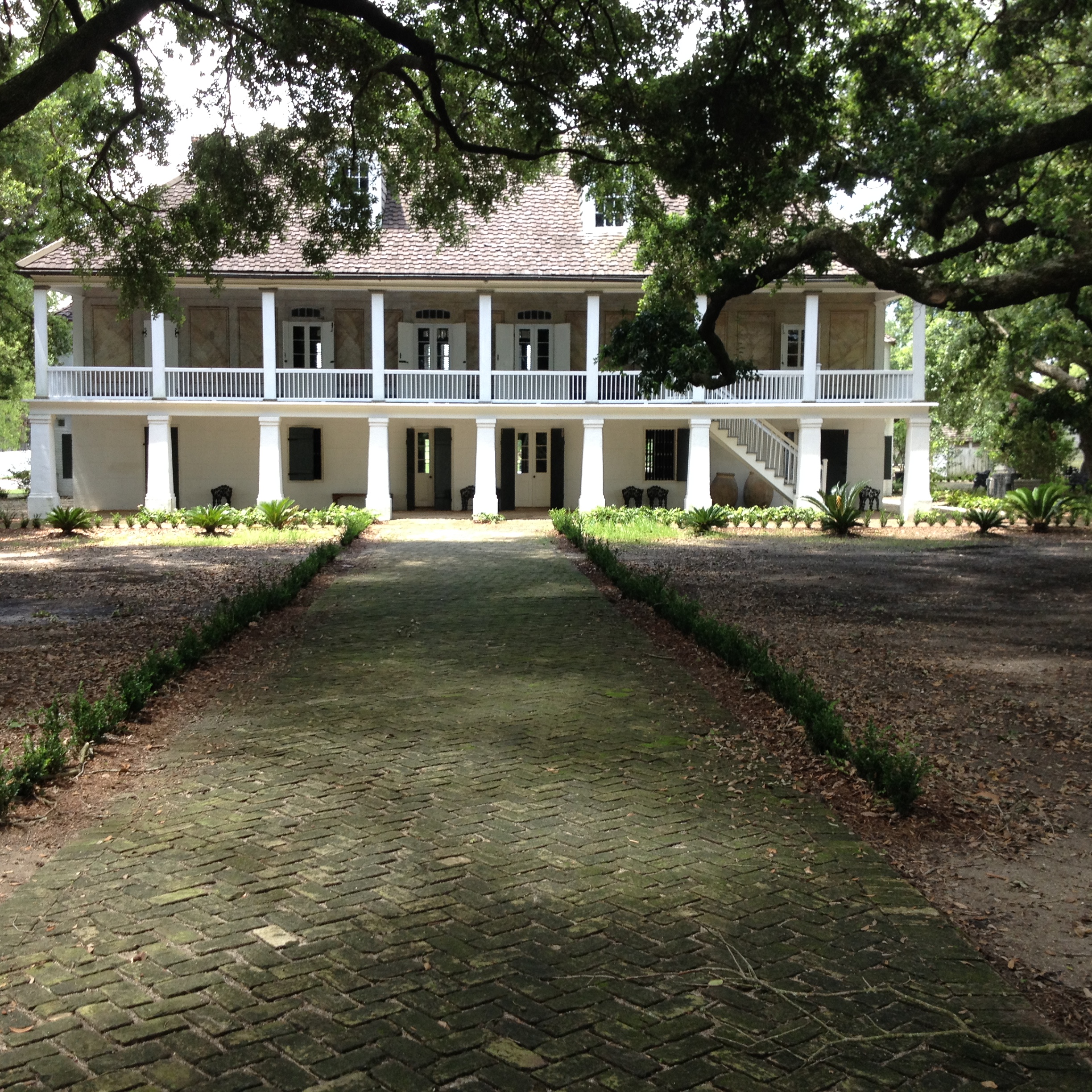 where there is a string of plantations just a few miles from New Orleans. Unlike other plantations, this one is a museum that documents slavery through the slave children’s eyes. Bought and restored a few years ago by a prominent white lawyer, John Cummings, the museum’s main purpose is to educate the public about slave life. To paraphrase Mr. Cummings, he created the museum to help people of all ethnic and racial groups to understand their common humanity and to demonstrate to those who share his skin color how horribly they treated others of a darker hue.
Throughout the grounds of the museum are statues of children whose faces were cast from actual photographs from this or surrounding plantations. Melanie and I were both moved by their blank and vapid facial expressions and bending submissive postures.  Their simple clothing, hung loosely on their frames, encrusted with soot and dirt, told of hard labor in the fields, cutting sugarcane and then boiling the cane in vast sugar kettles. As I stood in the walled memorial garden with the names of over two thousand slave children engraved in the stones, I felt a piercing pain, imagining my own sons and granddaughter as slaves. And as I continued to walk the grounds, I saw images of them and myself, reliving the lives these children endured. How would I have comported myself with the overseer? Would I have been sufficiently submissive? Would I have cast my eyes downward, appropriately bowing to authority? Or would I have been insolent and arrogant warranting the whip? As we entered one of the slave houses, I felt the discomfort of slave families jammed into wood framed dwellings, in summer suffering from the smothering Louisiana heat, and in winter exposed to the winter air seeping through the cracks in the boards.
 After a long day of labor from sunrise to sunset, I imagined weary bodies sprawled on straw beds under bed coverings of potato sacks.
The museum exists so that these slaves and the suffering they endured are not forgotten. Their names are engraved on black granite walls — those shipped from Africa with their country of origin and original name and those born in this country with their Christian names. Some names tell personal stories, collected during the WPA project during the Great Depression. Mary Harris, age 86 at the time, tells her story: Sure I remember slavery times. I was a big girl, turned eleven. I used to pull the fan that kep’ off the flies while the white folks was eatin’. It wasn’t hard work, but my arms used to get tired – ‘specially at dinner when they set so long at the table. I made the fires and brought in kinlin’ wood and carried out the hashes.
As we learned from our guide, there was a rank of commercial importance on the plantation – the blacksmith, the mule, the cook, and then the rest of the slaves. Undoubtedly, Mary Harris as a child was being groomed for work in the big house. Unfortunately, we did not get to see the big house. Torrential rains ended our visit abruptly. Happily, we were given a rain check and today we visited the kitchen where slaves prepared the food for their master as well as the big house itself. As plantations go, this one is modest in size and splendor compared to others along the river like Oak Alley. And like Oak Alley the walking path leading to the entrance of the home is lined on both sides with huge oak trees that provided a canopy of shade and served as a funnel through which air traversed to cool the house.
I’ve visited other Louisiana plantations but none equals the educational value of the Whitney. Nor did I realize I had a personal connection to the Whitney until I saw news coverage of the plantation’s opening. To my surprise I learned that Sybil Haydel Morial, the wife of the first black mayor of New Orleans, and with whom I worked at Xavier University of Louisiana, traces her roots to the plantation. Her ancestor, Victor Haydel, was the son of the plantation owner’s brother and an enslaved woman, Anna. Sybil’s son, also a former mayor of New Orleans, now heads the national Urban League.
Like many others who’ve read about slavery, I felt largely untouched by it. As a black person privileged to have been born in a strong family unit with equally strong attachments to the Catholic Church, slavery was distant and kept at bay. My two visits at the Whitney changed all that. I felt the pain and suffering of those whose stories were etched in stone. I heard their cries of anguish within my soul. I mourned with the child forcibly separated from her mother. I winced at the thought of being somebody’s property. I shuddered at the wheezing sound of the whip on a bloody back. I pitied the slave woman selected solely for the purpose of breeding. And lest I forget the price of insolence and resistance, there atop poles standing in the swampy waters of the plantation rested sculpted heads of slaves who revolted against their masters, a vivid reminder of the fate of those who dared to do the same.
As a Catholic, I am ashamed of the Church’s legacy in the legitimization of slavery through the papal bull of Nicholas V that granted the Portuguese the apostolic authority “to invade and subjugate the Saracens and pagans and any other non-believers and enemies of Christ wherever they may be, as well as their kingdoms…. and reduce their persons to perpetual slavery.”
Away from the plantation, revulsion best describes how I feel. I’m repulsed by the treatment and living conditions of slaves. Like Sybil Morial, my ancestral lineage traces back to slavery. And I wonder who among the names etched on the memorial walls might possibly be one of my ancestors. That our family has a lineage among the free people of color in Louisiana does not obfuscate our slave ancestry. Guillaume, Saizon, Darensbourg and St. Amant clearly legitimize our French heritage. But I am pained that some of my extended family do not embrace their African lineage. In honor and memory of enslaved men, women and children, I strive to live my life respectful of all people and cultures. Ferguson and Baltimore remind us that Lincoln’s vision for an emancipated people is not yet fully realized. We all have much more work to do. Yet, there is reason for optimism. In the museum store there is a wall of posted notes left by visitors. One of them, left by six-year old Julie, is particularly moving: Thank you. I am six. I wish I could save them.”
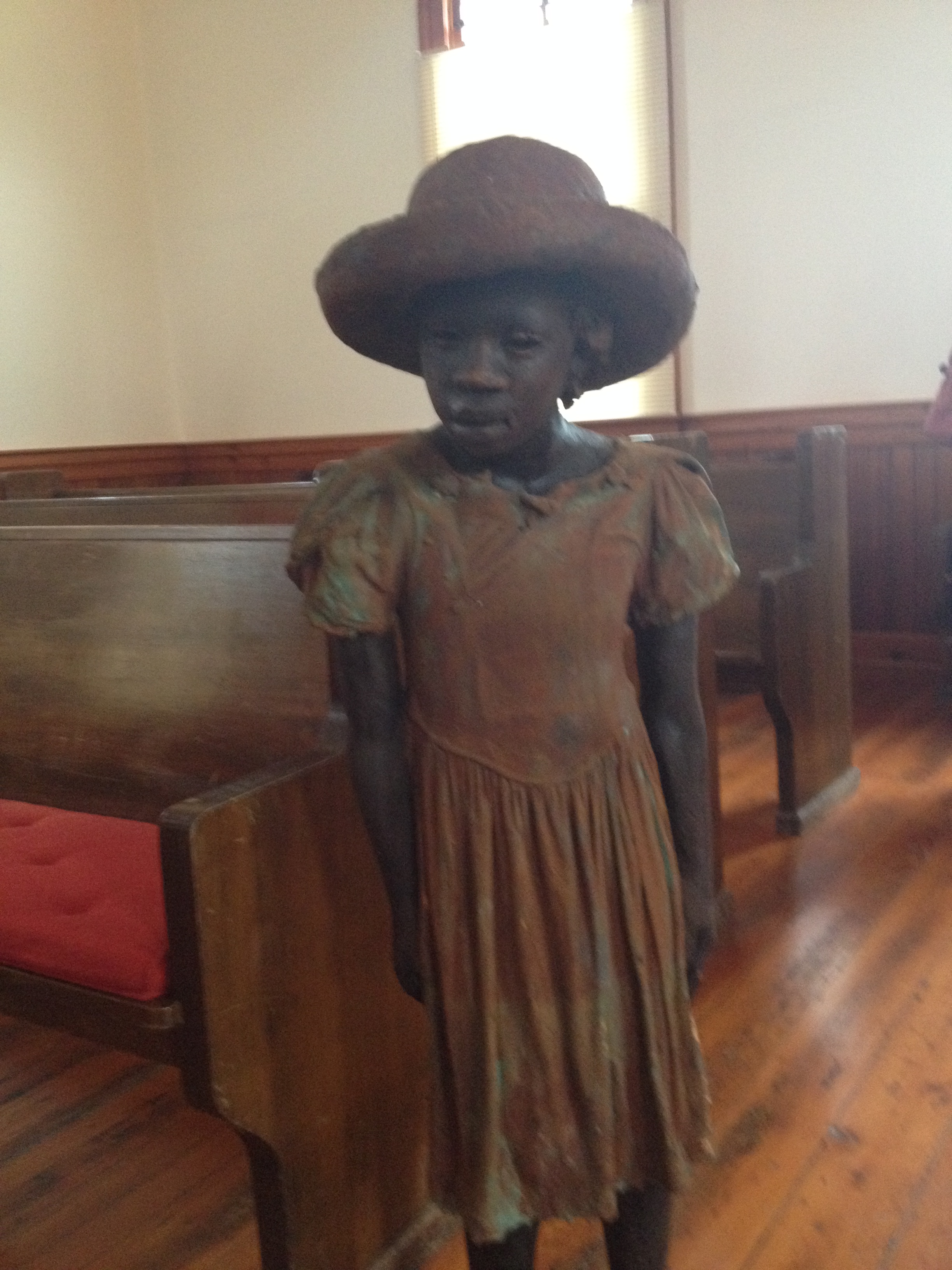

“When children used to get a whipping, they was taught to turn ’round and say, ‘Thank you, ma’am, for whipping me’ and bow. That was mighty hard to do, but we were never allowed to pout. If we did we got another. And if we just needed being punished, we were put behind a door and had to stand on one foot until we were ready to say we were sorry and promised not to do it again. If we told a story, our mouths were washed out with a soaped rag.” Francis Lewis – Louisiana Slave

8 responses to “Eye on Louisiana’s Slave History”
Leave a reply to McIntosh, Johnny L Cancel reply
Recent Comments
 | Tim Size on Provençal Homecoming |
 | rnpamela on Provençal Homecoming |
 | dlsmithmd57 on Nerdy New Orleans |
 | Don Wycliff on Nerdy New Orleans |
 | Paul Guillaume on Nerdy New Orleans |
 Alfred Guillaume
Alfred, I always enjoy your writing but this one was difficult to read. Not because the writing was bad but because the writing was so personal that made the topic so real. I often think of the pain and suffering of slaves and wince at the thought of being owned, not being allowed to be yourself, and wonder and surprise that real people could be slave owners without any guilt. But culture can lead us into a horrible place that overwhelms our natural empathy for others. Chris and I visited plantations in New Orleans many years ago but there was no museum at the Whitney Plantation. We cannot miss visiting there the next time we are in New Orleans.
Alfred, A fascinating post. On one of our visits to New Orleans Char and I went to a plantation in Oak Alley, but I remember no particular memorialization or history about slavery at the plantation. The focus I recall was on the grounds themselves and the architecture primarily. You have captured so many thoughts that we who have not directly known slavery might have as we witness the deplorable and inhuman treatment of other human beings. Thanks for posting this and especially for sending it to me. I am on our annual 2 week vacation in South Carolina, arriving just earlier this evening. Look forward to seeing you in the coming weeks. We need to do lunch again soon. Best to Melanie. Johnny
Sent from my iPad
John L. McIntosh Associate Vice Chancellor for Academic Affairs Indiana University South Bend 574.520.4343 jmcintos@iusb.edu
Looking forward to discussing this with you later this summer.
Alfred, you did it again! But/And….this was your best! So glad you and Melanie were able to visit Whitney. I now can look back at our trip to the Whitney and remember it with a different understanding given your thoughts and descriptions. Thank you for your emotion-filled words, your clarity, your honesty.
Thank you, Alfred. Speaking this truth in all its pain and ugliness is very much needed. May more of my race enter into the lament the truth stirs. May we find a way together to break the power of systemic racism.
This painful to read….more painful to think about ….seen through the eyes of children makes it even more ugly. I want to celebrate the courage of of the ultimate survival of slavery by so many beautiful and brilliant citizens we know of this horror period in our country….no other antidote to depression In response to facing this historical detailed reality.
Hello Mr Guillaume. I enjoyed reading your blog post titled, Eyes on Louisiana Slave History. I too have had similar feelings about and a few amazing discoveries which connects my family back to the Whitney Plantation in various ways on both the enslaved and slave owners sides of our family at the Whitney Plantation. Sorting out those feelings and emotions has helped me to focus on identifying those who are responsible for giving me such a rich ancestral history that I am only now beginning to embrace and appreciate.
I invite you to view my blog post titled, My visit to “the Habitation Haydel”,The Whitney Plantation in Wallace Louisiana see here: http://michaelnhenderson.com/my-visit-to-the-habitation-haydelthe-whitney-plantation-in-wallace-louisiana/ There you will see how, I’ve journey back in time and have documented my ancestral line that led me to the Whitney plantation and further discoveries.
I also noticed a few common surnames you’ve listed as also being in your family, one in particular Darensbourg which is also part of my maternal line of ancestor. I am curious to know how did that surname originate in your family line.
Mr. Henderson, I apologize for the long delay in responding to you. I was in France when I received your note. I’m now back in the states.
I’ve read with great interest your personal story and connection to the Whitney Plantation. Truly, as you so aptly depicted in words and pictures, the journey there is an emotional one for those of us whose lineage is deeply tied to Louisiana’s slave owners and slaves. Your genealogical history has encouraged me to further explore my own. I can trace my father’s lineage to the early eighteenth century; my mother, whose maiden name was Saizon, traces her roots along False River and New Roads.
You inquired about my connections to the Darensbourg name. My father’s mother’s maiden name was Darensbourg, but the name exists on my mother’s side as well. Her mother’s sister married a Darensbourg, so her first cousins on her mother’s side are Darensbourg.
Along the lineage trail, we may related as well.