Beginning Anew In Provence
March 3
Since my retirement last June, I’ve been anticipating our two-month stay in Provence. Of the twenty-two regions in France, this is my favorite and the one with which I am most familiar. I first came here in the sixties as a student, spending the summer with a French family. Although my classes were in Avignon, I lived in a smaller village just over the river in Villeneuve-lès-Avignon. Each morning I rode a small scooter to class. I returned to Provence several years later as a Fulbright student in the early seventies while finishing my doctoral thesis. Then I was an American language teaching assistant at Lycée Thiers in Marseille. Oh yes, there was an English language assistant as well. Ian, my counterpart from Great Britain, thought Americans spoke a bastard English. I sensed by that he meant we did not speak a proper English, certainly not the highbrow accent he spoke. Nevertheless during our year together, we were pals. To be so, I had to brush aside his superior demeanor.
On repeat trips to France over the years, I’ve always gravitated to Provence. There is something special here. The mellifluous accent, the strong winds, the rosé wine, the scrumptious dishes, the reddish soil, the clear blue skies, the bright sun, the the varied colors in the gardens, the Mediterranean, the dusky landscapes lined with vineyards, all good reasons to return. And we have friends here. We’ll rent an apartment soon, but for the moment we are staying with good friends in their home at the top a hill with glimpses of the sea below. By chance, during a summer vacation in Brittany, Melanie and I took a side trip to Toulon at the invitation of a Fulbright scholar, who had spent the previous year at IUSB. Once here she introduced me to the director of international programs at her university. In a warm and delightful conversation he and I acknowledged quickly our mutual interests in furthering study abroad opportunities for our students. And several months later, when he came to visit our campus at my invitation, an exchange program between our two universities was born. For over ten years now, we’ve had students and faculty crossing the Atlantic in both directions. Just before my retirement, I spent five weeks at the University of Toulon-Var teaching a mini-course on Louisiana culture. And during this trip, Melanie and I will meet and spend time with two IUSB students and Gabriel Popescu, an IUSB faculty member, here for four weeks teaching a course in United States geo-politics.
But before that happens, we are beginning to do the necessary chores to integrate ourselves to the rhythm of daily life. Groceries are high on the list, and we spent the early afternoon at the local supermarket where we even signed up for our faithful shopper card. And no shopping in France is complete without a visit to the local patisserie where we bought a baguette for the ham and cheese sandwiches that we hungrily ate for lunch. While in town, we pulled into a gas station that was also a women’s lingerie boutique, a new experience for us. Later we will stop by Orange, a telecommunications boutique, to have our French phones re-charged. Tonight we’re having dinner with friends on the beach at a restaurant that we know well. Tomorrow we will go downtown to reinstate our bus passes and senior discount pass for the trains. Once we’ve completed these necessities, we’ll begin exploring Provence. As an artist whose gallery we visited in Brittany, and from whom we bought a small painting that now hangs in our family room, told us, “Il faut découvrir la Bretagne profonde.” In other words, he encouraged us to venture out and discover the Brittany countryside. The sunny weather with its cool crisp air is just right for exploring the Provençal villages and towns. The magnolias  are in bloom and lemon and orange trees have fruit. And although I’m anxious to ensconce myself in new surroundings and learn new things, sitting in quiet places with a good book is very much part of my agenda in the next few weeks.
March 4
Wherever I travel, I like to fit in the daily flow of life and live like the locals. That way I can soak in the infinite possibilities that any region has to offer. But with those rewards come challenges. Already three days into our Provençal adventure, we’ve had our share of mishaps. Before leaving the United States, our flight from South Bend was canceled because of mechanical problems pushing back our journey one day. And when we finally landed at Charles DeGaulle airport in Paris, a false bomb alert kept us, and hundreds of other passengers from across the globe, penned behind the customs barrier. After an interminable wait in a stuffy room with little air, we were finally permitted through customs. Then there was chaos in trying to find our luggage among the dozens of conveyor belts in two different halls. Our seemingly phantom flight did not appear on any of the flight monitors. The delay in finding our luggage coupled with the wait at customs erased the hour and a half early arrival of our plane. Luckily, we had ample time to catch our train to Marseille. The TGV, the high-speed train, is a marvel. During the three and a half hours of our journey, we zipped by beautiful and changing landscapes of snowcapped mountains and pastoral vistas.
Once in Marseille, our rental car was waiting. Dusk was approaching. And foolishly, we programmed our GPS to avoid the toll roads. Ordinarily, this would have been a rational decision that would take us along beautiful vistas along the coast through charming little villages. However, darkness settled in quickly. In the empty black night, there was nothing to be seen along the unfamiliar curving roads on the cliffs; and the pleasant journey we anticipated added stress to an already tiring day.
And, today, in our effort to maximize time, we decided, before meeting our friends for dinner, to drive into town to have our French phones reactivated and to have minutes added. Again, not a wise decision; the rush hour traffic was horrendous. After several attempts around roundabouts, and taking a wrong turn toward oncoming traffic on a one-way multi-lane avenue, we abandoned any hope of finding the parking lot of our desired location. We went instead to the Lido, a restaurant on the beach we know well and frequented often, to meet our friends. We got there an hour early and thought we would have an apéritif while waiting the arrival of our friends. No, that was not possible either. We were informed that the restaurant did not open until 8 o’clock and were directed by the waiter to a café across the street. Instead, we waited in our car. But the evening ended perfectly with a delightful meal of cabillaud, a white flaky fish similar in texture to cod. And the wine, of course, added to its delicate taste. A delicious crème brulée made the evening more special. As for the phones, we’ll try again later today, this time by bus. It’ll be awhile before we dredge up the courage to drive downtown again.
To all my New Orleanian family and friends, Happy Mardi. The good times are rolling. And here, nearby in Nice, floats and maskers will greet happy revelers as well. But not us, we’re content to stay put.
RETIREMENT IS….
Retirement is the freedom to do what I want, when I want, and how I want to do it. That’s basically how I describe my retirement now seven months old. Admittedly, it’s a simplistic way of explaining time that is now measured in repetitive Saturdays. Unencumbered with the toils of academic administration and the accompanying emotional ups and downs, my life has new meaning as I will explain later. I’ve learned quickly retirement is not a tabula rasa where all connections to university life are severed. There are things I miss. I miss the daily interactions with my staff; I miss the connections with the faculty and the creative energy I derived from them; I miss exploring with them the possibilities of a great university; I miss the collaborations that make dreams real; and I miss the intellectual stimulus that permeates the life of an engaged university. To have had a career as teacher, scholar and university administrator has been the greatest reward of my professional life. And yes, there are things I do not miss, like the perennial challenge to do more with dwindling resources. But seeking solutions to critical problems provided opportunities for fellowship and collaboration that endured beyond any successes or failures. Without these competing tensions, fulfillment might have been unattainable.
Retirement does present its unique challenges, however. Transitioning from a programmed daily schedule to seemingly no restrictions on time is akin to being a man with a purpose to one in total isolation. And although my energies are no longer focused on advancing excellence, I nevertheless struggle to seek equanimity between a well-earned respite and the need to be progressively active. In my professional life, I was intensely involved in the community because I believed firmly that as a public servant I had responsibilities to actively participate in the public life of my community. As a private citizen, I quickly realized those obligations did not suddenly abate or vanish. I am as equally engaged as ever, even taking on new leadership roles. What is different now is that I am more sought after for counsel. I meet regularly with community members and groups seeking solutions to problems or advancing ideas that improve our community. I even participate in a group of retired businessmen, Sage, who gather together periodically over breakfast to learn, and to offer advice, about important civic and business issues. And perhaps the most important role I’ve assumed is leadership of the 100 Black Men of Greater South Bend. Our work with young black males is essential in ensuring a healthy and vibrant African American community.
Amazingly, I am regularly asked about my adjustment to retirement; to those who inquire, I typically lightheartedly respond that I am so busy now I wonder when did I find time to work. This flawless transition to retirement rests largely on the plethora of advice I received from numerous retirees. A dear friend, a guru of business entrepreneurship, who initially adjusted roughly to retirement, gave me the most salient advice, plan a daily schedule and stay connected. In the months preceding retirement, my mother, fearing that I was too young and too accustomed to being busy, worried constantly that I would not fare well. To my friend, to my mother and to those who may have had similar concerns, retirement has been a blessing. Leaving the workplace, and particularly leaving an institution to which I’ve devoted enormous energy over fourteen years, was not easy. But I came to realize over time, that my time had come. The faculty and the new administration are building upon decades of academic excellence, and the university will continue to thrive, focusing on new energies, new visions, and renewed collaborative partnerships. The time is ripe for me to re-invent myself and re-dedicate myself to personal growth and to family. I have more freedom to do what is important to me. Melanie and I enjoy the extra time together, particularly our travels. Upon retirement, we embarked on a cross-country trip for two months visiting family and friends from coast to coast. I’ve rediscovered leisurely reading; my exercises are more routine, a benefit to my physical and emotional health; and I have more time for reflective thinking. What I look forward to now is spending more time in the garden, doing projects around the house and re-engaging my scholarly interests.
Shortly, we leave for a two-month sojourn in southern France, but not before taking detours, Melanie to Portland to see the beautiful grandbaby, and I to New Orleans to see my mom, the youngest and the oldest family members. In my last blog entry of several months ago, I reveled in the seductive charms of New Orleans. Then the city was bathed in warm bright sunshine; except for a couple of warm days that greeted me upon arrival, the temperatures have been chilly and wet. I shouldn’t complain; Granger since my departure is still cloaked in snow with icy sub-zero or single digit degree temperatures.
Unlike the last visit, my time in New Orleans has been spent chiefly with my mom. Entrances and exits of various family members have added spice to the fast moving days. Other than an occasional lunch out, I’ve not ventured far. I begin each morning with a three-mile walk in City Park near my mother’s home. The first day’s walk was with an old New Orleans childhood friend, Eileen Julien, and now colleague from the IU Bloomington campus, who was in town for the weekend. City Park, formerly a nineteenth-century plantation, is a beautiful and grand public space upon whose land resides the New Orleans Museum of Art. Picnic grounds and other recreational areas afford ample leisure. 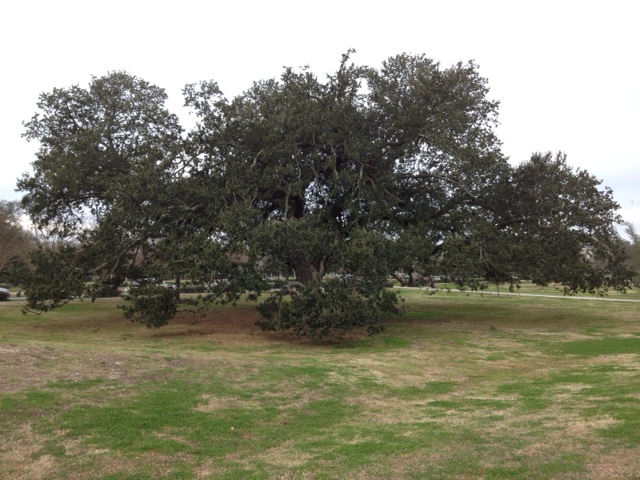 Native plantings, and sculpture and botanical gardens add natural and artificial beauty. Lining my walks are majestic oaks with snarling branches that loop up then curl downward, snake-like hovering inches above the ground. I imagine what passersby these venerable trees have witnessed over decades, some aimlessly walking, others, like me, walking briskly with purpose. What famous painter or writer over the centuries walked these same paths? What political figures? What families, prominent and ordinary? I imagine myself walking amongst them. And what natural catastrophes have these trees endured? Katrina surely had to have been the most traumatic! And still they stand gracefully in majestic splendor, resilient and defiant.
The Big Easy
Oct 18. En route to Baton Rouge for my niece’s wedding, the bumper sticker on the car speeding ahead proudly proclaimed, “La Nouvelle-Orleans, c’est chez nous”(New Orleans is home).” In the local vernacular, my immediate and emotional response is “Yeah, ya right.” There just ain’t no place like N’Awlins. 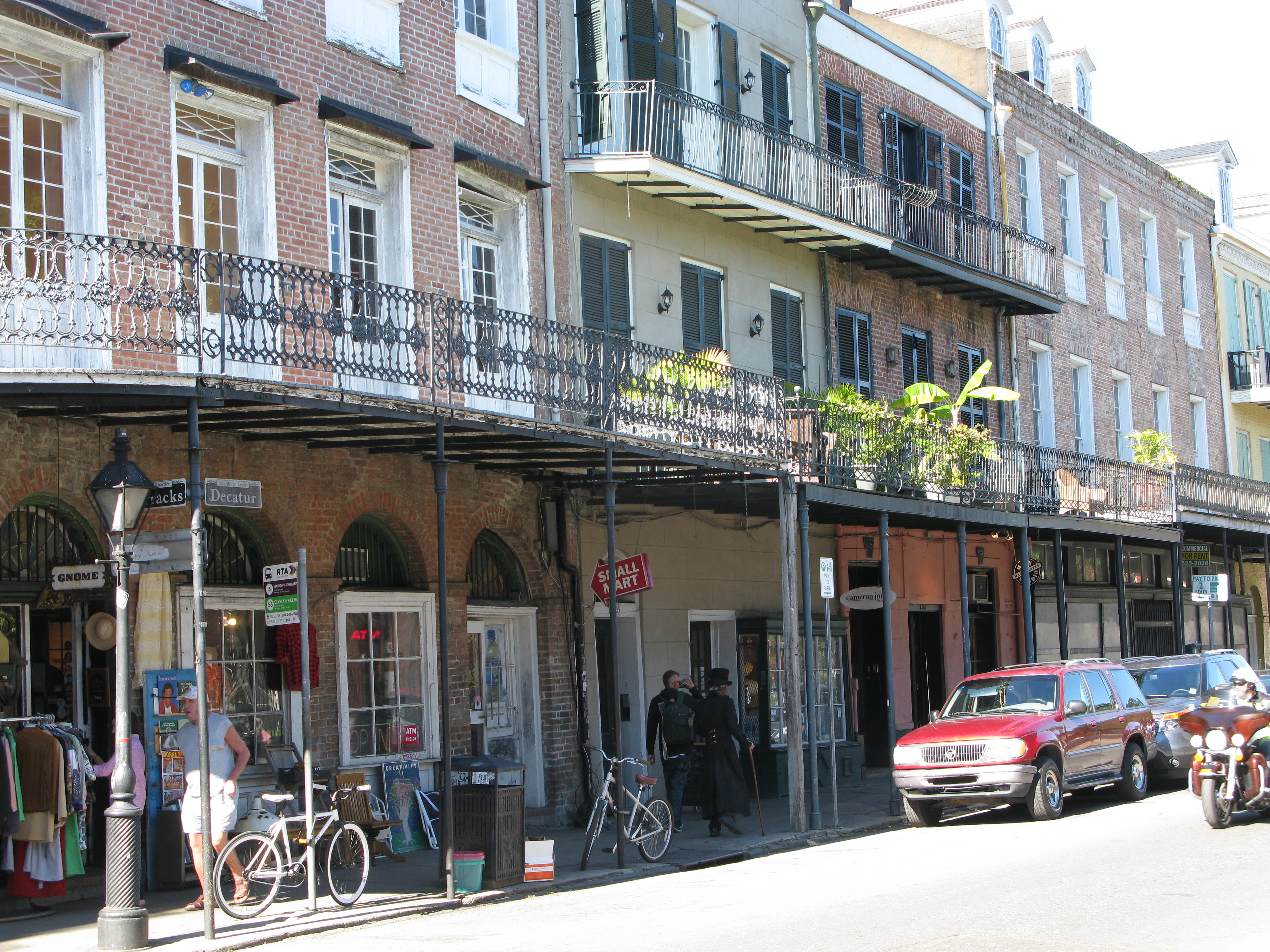 Memorialized in song and literature, this land of bayous and swamps seduces the unsuspecting stranger. Nestled at the crescent of Mark Twain’s mighty Mississippi, New Orleans is a contemporary American city flavored with European-Caribbean charm, evocatively and romantically described in the writings of George Washington Cable, Lafcadio Hearn, Alice Dunbar-Nelson, Kate Chopin, Tennessee Williams, William Faulkner, Truman Capote, Walker Percy, John Kennedy Toole and Anne Rice. It’s a city with which I’ve had a longstanding love affair, a mistress that I’ve kept at bay but can’t make an everlasting commitment to.
No matter where I’ve traveled and lived, my cultural DNA is indisputably New Orleans. There is no escape. My African-American, Catholic, Creole identity is inseparable from the city. From the softness of my voice with its peculiar accented speech to my love of Cajun and Creole spiced food, there is no denying my southern Louisiana roots. Jambalaya, crawfish pie and file gumbo define the region’s distinctive culinary arts as do shrimp and grits, trout amandine, stuffed mirlitons, (alligator pears) and the popular oyster po-boy.
Good eating and fine dining was very much part of this last trip to the Crescent City. My younger brother, Warmoth, and his friend, Laurie, treated us to dinner at La Petite Grocery on Magazine Street, a new restaurant for Melanie and me.
 And the meal did not disappoint. Particularly noteworthy were the apple and celeriac appetizer with roasted pecans, fresh herbs and asher blue; the shrimp and grits and the shellfish stew. The food so satisfied our palates that Melanie and I returned the next day for lunch. She ordered another apple and celeriac salad, and I, a shrimp roll that rivaled the lobster rolls of New England. Eating in New Orleans is like being a child in a candy shop; so no visit to the city is complete without a po-boy. With my sister, Cynthia, we feasted on po-boys at Acme’s, a neighborhood restaurant on Veteran’s Boulevard. My mother’s favorite eatery is Landry’s on the lakefront where we dined on traditional New Orleans dishes of stuffed and grilled shrimp and tilapia. And with Winston, a friend and former colleague, I feasted on a bowl of turtle soup at Mandina’s on Canal and Carrollton.
The Magazine corridor in uptown New Orleans is our favorite neighborhood to stroll along. Untouched by Hurricane Katrina, this section of town with its large live oaks that cascade over the street has an Old World charm quite different from the French Quarter frequented by most tourists. Magazine Street hums without the sleaziness of Bourbon Street. Along the street are two-story residences with wrought-iron balconies, quaint regional and ethnic restaurants, antique shops, boutiques, art galleries, salons, and mom and pop businesses that cater mostly to the local clientele who live in the blocks cradling Magazine Street. There you’ll find the shotgun houses and Creole cottages 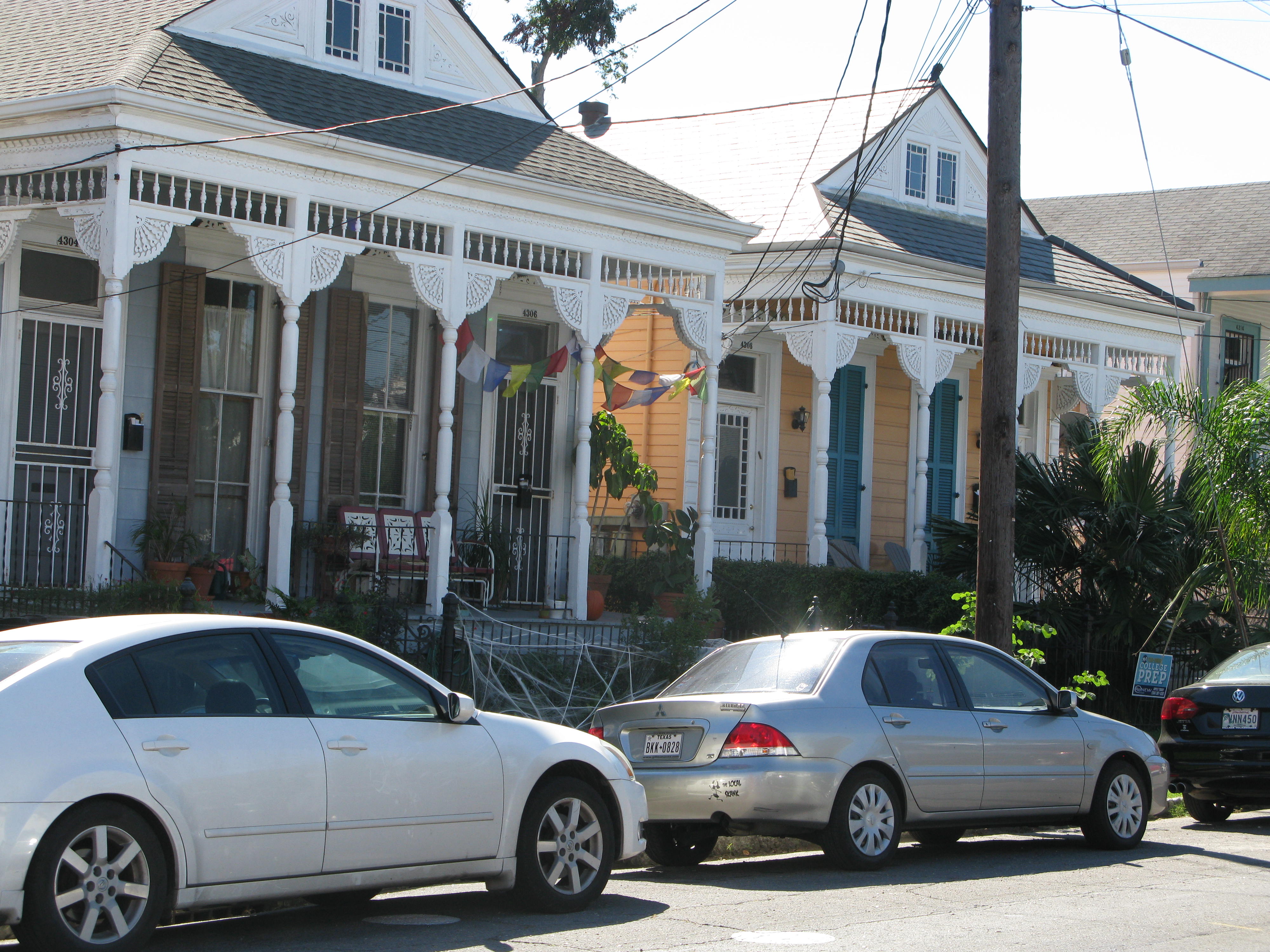 typical of the 1920s and 30s architecture.
It’s been eight years since Katrina. With each visit I see progress. Prior to the great storm, the streets and sidewalks were sinking, trash was strewn about and untamed weeds in public spaces defied any lawn grooming. Katrina exacerbated the problem; and although gallant efforts by city and state government show demonstrable improvement, these eyesores still persist. Along the lakefront, in an upper-middle to modestly upscale neighborhood, where my mom moved to after selling her hurricane damaged home, the streets are so badly buckled, you’d think you were in a third-world country. Some neighborhoods still have abandoned houses; in others, large tracts of land lay barren among a few re-built homes on stilts. Many neighborhoods have little resemblance to their former existences. Some residents have not returned; some, like my mom, live in different parts of the city. But what is most startling is the large number of new immigrants, not just Hispanics who poured into the city to find work as the city struggled to re-build, but Americans from other parts of the States. Appreciating the unique ethos of this European, African, Caribbean city, they’ve come to be part of this city’s re-birth. I’m told, for example, that in a city known worldwide for its cuisine, the restaurant scene has never been so robust with the high quality of new restaurants across the city. To assure the return of the old jazz musicians, a jazz village has been constructed offering housing and healthcare. These musicians are being joined by a new generation of musicians by whom a new jazz form is being improvised to blend with the old idiom. Public education reform is slowly advancing good quality education in poor neighborhoods. And now that city government has stable and visionary leadership, economic opportunity and development promises a brighter future. Perhaps New Orleans will no longer be the city that care forgot.
My love affair with the city is like the ebb and flow of the evening tide of Lake Pontchartrain. I am a native son. I love visiting the city. Now that I am retired, I’m often asked about moving back to the city. The answer is no. Because I know intimately her charms and her faults, I prefer to love her from a distance. In the land of the Who Dats, (as in “Who dat say dey gon beat dem Saints?”) food and jazz dance beautifully together. I’ll dine and dance and let the good times roll. And when I’m away, I’ll miss New Orleans in the way Louis Armstrong, the city’s favorite son, sings about it:
Do you know what it means to miss New Orleans
And to miss it each day and night
I know I’m not wrong this feeling’s gettin’ stronger
The longer, I stay away
Miss them moss covered vines the tall sugar pines
Where mockin’ birds used to sing
And I’d like to see that lazy Mississippi hurryin’ into spring
The moonlight on the bayou a creole tune that fills the air
I dream about magnolias in bloom and I’m wishin’ I was there
Yes, from its cuisine to its jazz, New Orleans intoxicates and seduces the unsuspecting traveler. So what are you waiting for? Lose yourself in this alluring land of swamps and bayous. Love New Orleans, and she’ll love you right back.
Postscript: November 1. My four siblings and I are fortunate to still have with us our eighty-seven year old mother. Although age has slowed her step, she keeps active. She takes classes on subjects of interest and exercises regularly at the senior center near her home. One afternoon we met one of her teachers who eagerly let us know what an example my mother is for some of the younger attendees.
I’m very pleased how well my mother has adapted to post-Katrina life. Her positive can-do spirit is inspiring. Her only disappointment is that my siblings and I won’t let her drive. She’s been fiercely independent and is not happy about relying on others to drive her places. We, on the other hand, want to assure that she remains safe to live a few more contented years. Since no male relative on either side of my family has lived beyond age seventy-nine, reaching my mother’s age is a personal goal.
The singular word that best describes my niece’s wedding is grand. There were twelve bridesmaids, including the matron of honor, her older sister. Guests in attendance exceeded six hundred. Although a bishop was in attendance, (a friend of the groom’s family), the Mass was concelebrated by four priests. At the reception, my brother and his daughter danced to “It’s a Wonderful World.” Melanie and I were able to slip in a foxtrot but most of the music was meant for a much younger generation and not suitable for ballroom dancing.
And though we spent ten days in New Orleans, my mother reminds us that we did not stay long. In her golden years, she misses having me near. I’m the only one, the eldest of five, to live so far away. But I’ve assured her that in my retirement I’ll have more free time to visit.
On The Road Again
October 3. Since retirement, it seems as if I’ve taken on a new persona as a wayfarer. Home barely a month after our two month cross-country odyssey, Melanie and I are on the road again, this time heading east for Melanie’s fifty-year high school reunion in Auburn, Massachusetts. The occasion also gives us time to visit our two children in the Boston area, Amanda in Malden and Paul and his girlfriend, Katie, in East Boston. The journey across I-80 is familiar to us; we’ve traveled this way frequently. For several reasons, this route is exceptionally appealing. The ever-changing seasonal landscapes never disappoint, particularly in fall and spring when nature’s colors dazzle the viewer. And now as we trek across the Pennsylvania Wilds, this eastern landscape is ablaze in bright yellow and orange, reminiscent of an Impressionist’s palette. And although tints of red occasionally add rhythmic counterpoint to this magnificent splash of color, Melanie reminds me that in New England the reds are both more plentiful and more scarlet in color.
Brilliance is also applicable to the Auburn High School Class of 1963. 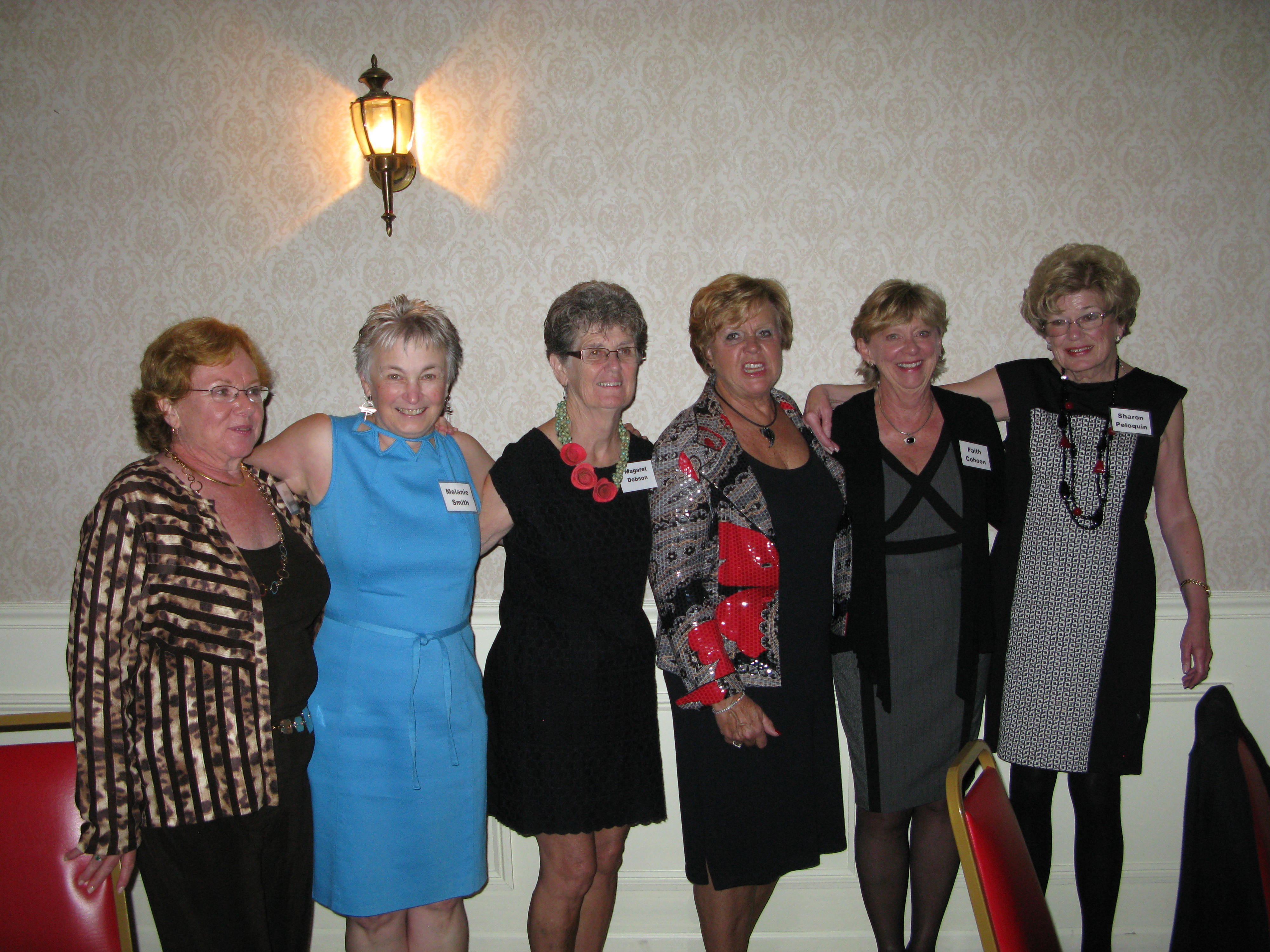 Indices of measuring success point to a class that achieved the American dream. Among these students of working class families are teachers, engineers, research scientists, nurses, military career officers, university professors and administrators, insurance executives, banking managers and entrepreneurs. As an outsider, it was fun to observe their interactions as they renewed acquaintances, traded stories, and celebrated professional achievements of the last fifty years. I listened gleefully to the banter and anecdotes about sweetheart crushes, academic competitiveness — successes and failures –- athletic prowess, and tidbits about teachers.
Adding to the magic moments of storytelling was music from the 50s and 60s, expertly executed by a talented three-person combo. Their first musical selection was a rumba that found only Melanie and me on the dance floor. Surprisingly, the ensuing musical selections did not entice others to join us. We later learned from one of Melanie’s classmates that we had set a high bar intimidating others. Certainly, that was not our intention. But as the consumption of alcohol increased, inhibitions were cast to the wind, and the dance floor became crowded with arms in the air moving in sync to swinging hips. 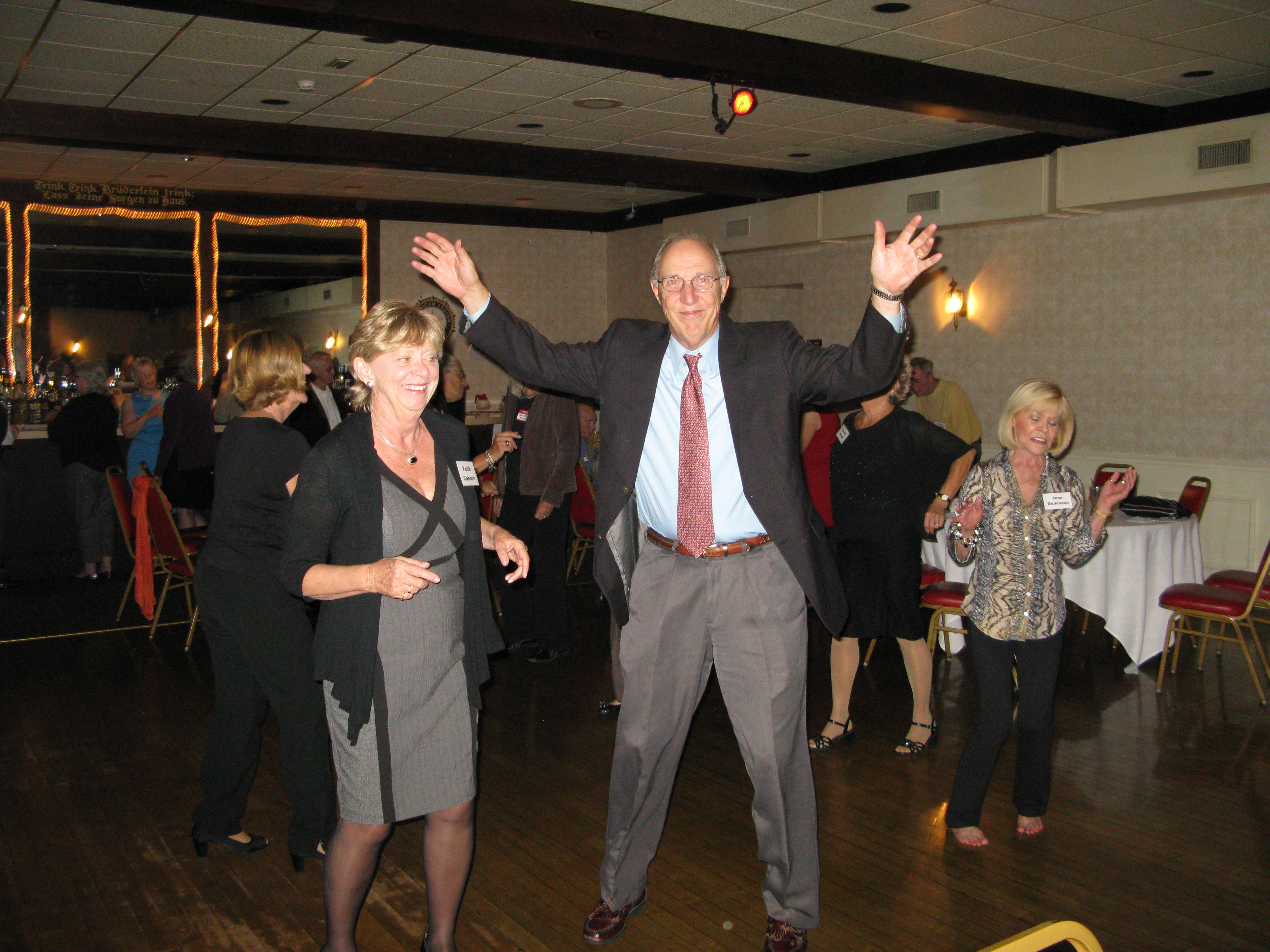 The intoxication of familiar tunes of Chubby Checker, Chuck Berry, Dion, the Isley Brothers, Gary U.S. Bonds, Wilson Pickett, Willie Nelson, Sam Cooke, among others, made the evening magical. The music had happy feet dancing the swing, the twist, the cha-cha, the slide, the bunny-hop, the waltz and the inimitable two-step, — the latter dance particularly popular when the combo crooned doo-wop songs, encouraging several of us in turn to join the chorus of doo-wop harmony. All in all, it was a memorably gay evening. My own fifty-year high school reunion happens next year in New Orleans, a city renowned for its good times.
If you’ve been following my blog since its inception, you are aware of my internal dialogue about making the transition into retirement. Surprisingly, my fears were unfounded; I’ve adapted easily from a regimented schedule to one free of the necessity to fill every moment with some meaningful tasks. Initially, idleness made me feel guilty. Surely, nothing good comes from unstructured time. But as each day unfolds, I am discovering that idle time is rare. Luckily for me, our cross-country journey was therapeutic escape from the titled self-identity of university administrator. For the first time in decades, I was simply Alfred. I was responsible for no one other than myself. I was free to do what I wanted when I wanted. I did not need to plan; I could do things spontaneously, even take a mid-afternoon nap. I was no longer tethered to the cell phone or the laptop to tend to those 24/7 chores that demanded my attention. Frankly, I am amazed how quickly I ‘ve cast aside the responsibility of academic administration. There are principal reasons to explain why this is. First, I feel that in my fourteen years at IUSB I’ve made significant contributions to academic advancement. Second, the university is well-poised for different advancements under new leadership. IUSB’s current chancellor, an experienced university administrator and academic, is well-versed in the issues facing universities nationwide and is setting the right tone for the future that will enable the university to prosper in partnership with the faculty and the at-large community.
Just the other day someone asked me if I missed my work. My answer is simple, though contradictory. Yes, I do, and yes, I don’t. I miss engaging the faculty, working with them in setting new directions, imagining and re-imagining the possibilities, and, most of all, enabling and encouraging them in their work. I don’t miss the increasing bureaucracy that demanded more and more of my time. But life in retirement, like the river currents, continues to flow. After a few more trips to visit family in the next few weeks, my pace will slacken and life will return to normalcy. How that will be is not yet defined. Besides travel, I continue my commitments in the community; I have more leisure time for reading and gardening, and to keep my mind active and vibrant, and I’m sitting in Professor Andrea Rusnock’s class in art history. Next semester, I’m considering a course in gender studies. But for now, it’s more travel. My niece’s wedding in Baton Rouge happens soon.
Yippie-Ki-Yay! Cowboy Country
August 30. The mountain ranges that encircle Salt Lake City are the most beautiful I’ve seen in our two-month travels. On this crisp morning, as we left the city en route to Cheyenne, filtered light from the sun’s rays created a variegated palette of warm earth tones across the face of the mountains. It was an auspicious beginning of a very pleasant drive to Wyoming, nicknamed the Cowboy State. Although Wyoming’s politics is colored deep red, its history is anchored in more progressive endeavors as it is the first state to grant suffrage to women in 1896, which explains its second moniker as the State of Equality. (Yes, we are standing next to a six-foot tall boot).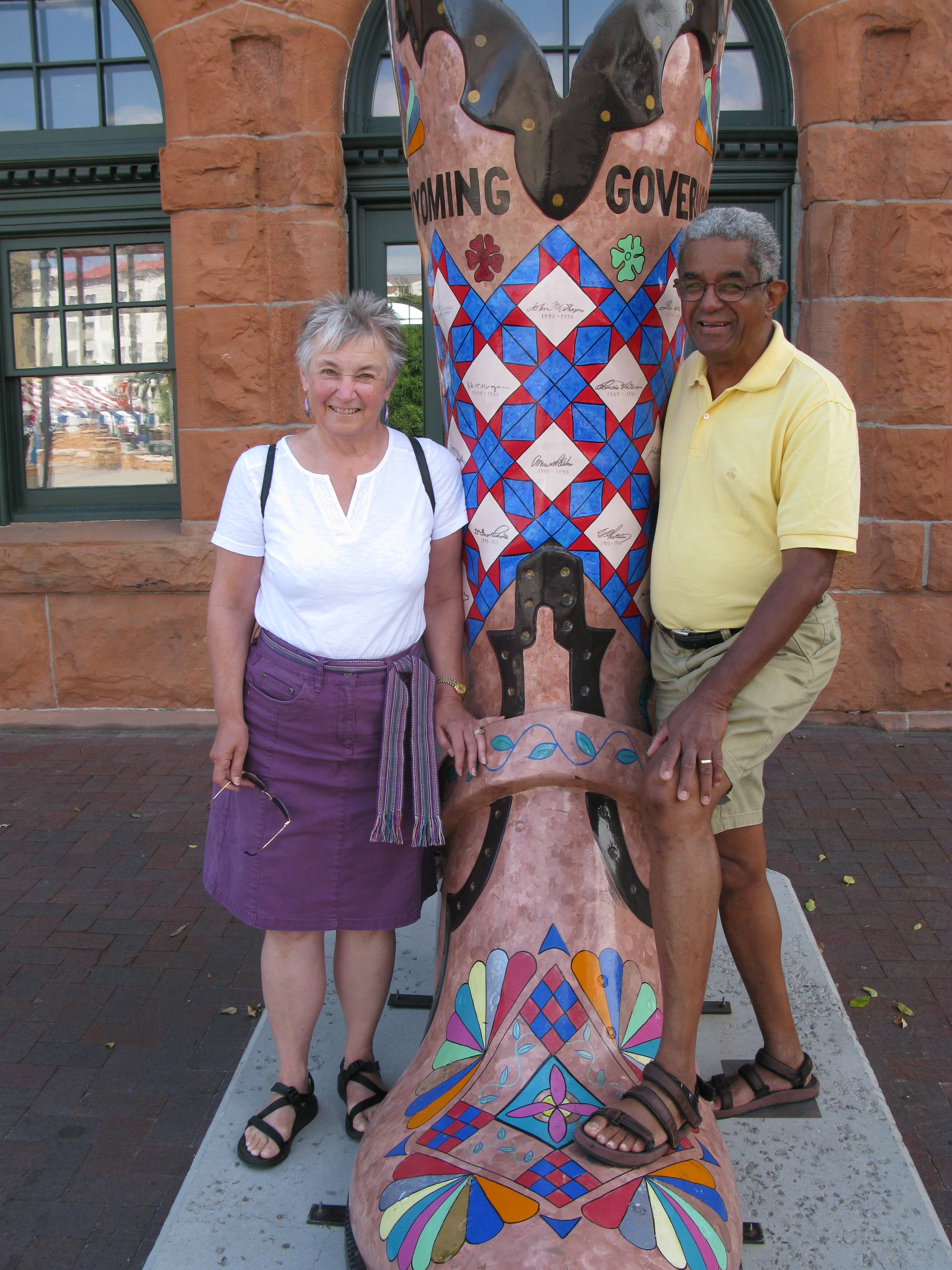
Cheyenne is the last stop of my post-retirement cross-country trip. Here Melanie and I are visiting friends, Bob and Carole Mathia, from Granger who retired here last year. Bob is a former city planner from South Bend and Carol, a retired Spanish teacher from Goshen High carpooled with Melanie for seven years. Bob’s first career was with USAID, United States Aid for International Development. Their home houses memorabilia from the many years he and his family lived abroad. Walking through the rooms of their eclectically furnished home is akin to taking a virtual tour of the globe. Bob has an extensive collection of elephants from Thailand, India and Pakistan. Rugs from Pakistan adorn the floors of each room. Walking canes seemingly from every corner of the globe affirm their globe-trotting past. The rocking chairs from each of the countries in which they’ve lived complement Bob and Carol’s convivial nature inviting the visitor to stay awhile. Adding to the charm of their home is Carol’s broad collection of Tweety Bird paraphernalia. Melanie and I particularly like Tweety leaning against the Eiffel Tower, a gift from one of our trips to France.
September 2. Our Labor Day weekend with the Mathias was low-key and relaxing. We had breakfast on Saturday morning with their daughter, son-in-law and granddaughter. 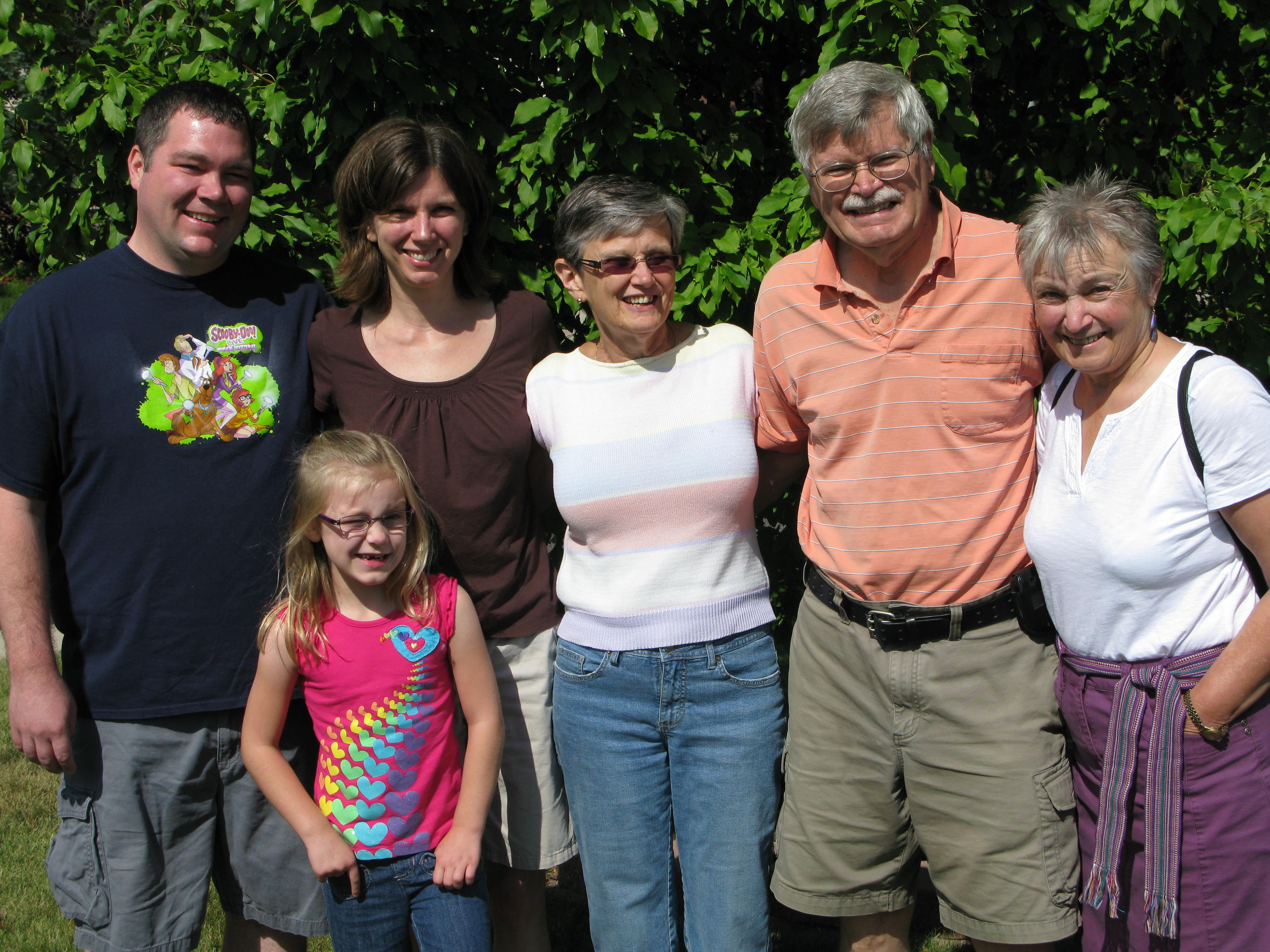 The rest of the day was spent touring Cheyenne. The town has an Old West feel to it. Walking around the central square, looking at the storefronts and the cowboy images, it is not hard to imagine the once untamed character of a dusty frontier. The old railway station and the huge locomotive nearby remind us of the importance of rail traffic in the development of the Western territories. We spent Labor Day at Bob and Carol’s log cabin about a two-hour drive north of Cheyenne. The landscape of distant rocky buttes and mountains with sagebrush spread over miles recalled boyhood memories of the Western movies that my brothers and I happily watched with our dad. This land seduces you with its open skies and vast stretches of land with limitless boundaries. I understand now why this region is called Sky Country.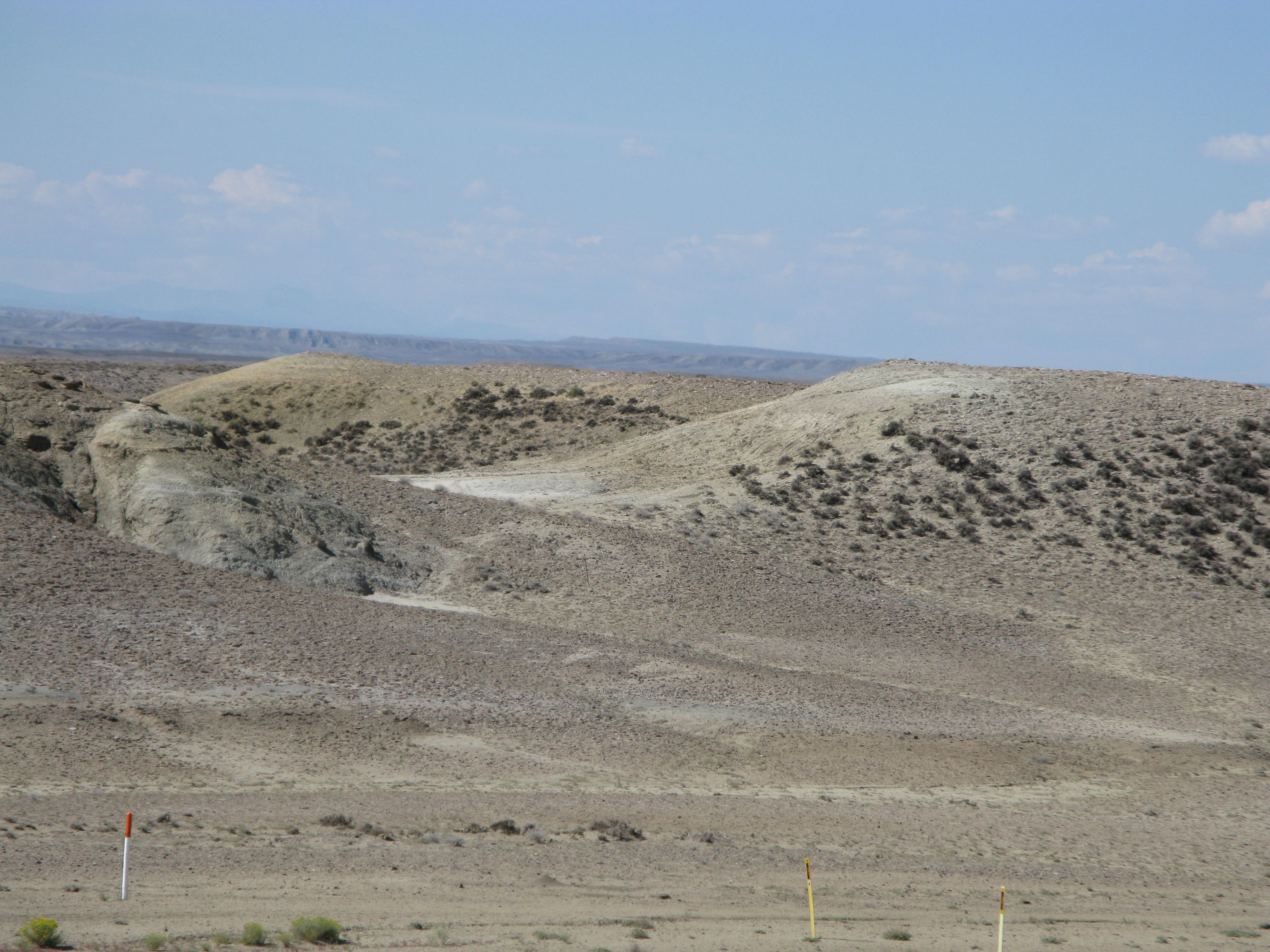
The canopy of sky surrounds and envelops you in a sea of marine blue; its starchy white billowing clouds create architecturally interesting shapes against this brilliant canvas.
Before arriving at the cabin, we stopped for lunch at a café in Chugwater, population 210, known for its delicious chili. And what a cultural experience! This café originally began as a drugstore and soda fountain in 1914, and from what I could observe, not much has changed since then. There was only one table occupied and no one at the soda counter when we entered, but not long after a steady stream of visitors came. Before long the place was packed. The number of people squeezed into this small establishment was matched by the hordes of flies that invaded the space. But what was interesting and almost comical was the elderly rancher, most likely the husband of the proprietor, who walked around with his fly swatter smacking the intrusive pests. What was equally amusing was that no one seemed to bother with him or the flies, and it certainly did not interfere with the tasty chili. And, we could not leave without first treating ourselves to tasty and refreshing shakes.
Later in the day, after spending time at the log cabin – although made of logs its size and interior accouterments qualify it more as a home away from home – we toured the countryside and visited another small town, Glendo, whose population was just shy of Chugwater’s at 205. The main drag could have been a setting for a Wyatt Earp film. We moseyed over to the saloon, passed through the swinging doors and entered a smoke -filled room rancid with the smell of tobacco and alcohol.  Every seat at the bar was occupied, so I could not get the full cowboy experience as I had envisioned. Besides, the heavy smoke made it practically impossible to breathe, so we ordered a six-pack to go. We returned to the log cabin and drank our beer with sandwiches. It was a much better ambiance anyway as the sun began to set casting a warm glow over Mount Laramie.
Our stay with the Mathias was much too short and did not allow time for a visit to the Black Hills or Mt. Rushmore. That will have to wait until our next visit westward across I-80. Our two-day journey home after Labor Day was uneventful. Once we saw the cornfields of Nebraska, we felt home was near. Since our arrival, we’ve kept a busy schedule of volunteer activities, outings with friends, and chores at home. Melanie had jury duty and has resumed her church meetings. And I’ve stained the pergola over the deck. There are still at least two more chapters of this post-retirement odyssey. So stay tuned.
Roses to Redwoods
August 22. After two and a half weeks with little Eliot, saying good-bye was not easy. Melanie thought that she might cry, but the next morning we left without the anticipated melodrama. Seated on the front lawn with his mother, we waved good-bye to him with the thought that the good times we shared with him will have to sustain us until our next visit. Then he and his parents will be settled into their new home and, naturally, he will be walking with a much expanded vocabulary that will have progressed from his current babblings of “ba” to a richer repertoire of melodic phrasings.
The next stop on our nomadic journey was Bend, Oregon, to visit Don and Joanne Christensen, friends from our days in Arcata/Eureka. Not until then did we get our first clear sighting of Mt. Hood.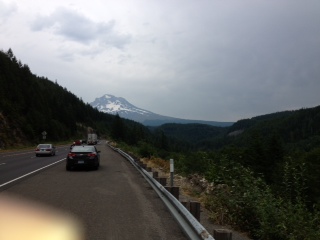 The rolling hills with its masses of tall thick green foliage gave way to the flatlands of desert sagebrush as we descended on the other side of the mountain toward Bend. The sudden and stark contrast of the two landscapes was a quick reminder of this country’s vast and varied topography.
Our time with Don and Joanne is always relaxing; their home in the high desert was a welcoming retreat from the whirlwind of our travels. Don and I served together as vice presidents at Humboldt State University, he in public administration and I in Academic Affairs. With each visit at Don and Joanne’s, we experience something new. This time we attended the annual art fair along the Deschutes River. Each couple made purchases; ours was a wedding gift for my niece in Baton Rouge; theirs a wooden bowl for the dining room. Its final resting place is not yet determined and the subject of much speculation. But it will surely complement the artful décor of their grand home. Perhaps their home’s most endearing charm is the cinematic sunsets of Mt. Bachelor framed by the windows in their kitchen and family room. As we sat at dinner one evening, the sky was ablaze in color; the sunset of dark, magenta rays bathed Mt. Bachelor in a magical glow.
From Bend we traveled to Ashland to visit another dear friend from our Northern California days, emeritus professor of French, James Gaasch. In the mid-nineties, Melanie and I had an experience of a lifetime when we visited him and his late wife Isabel in Rabat, Morocco, where he taught on a yearlong Fulbright. To this day we talk fondly of our travels in the desert, the wonderful food prepared by their cook, Fifi, and that special time when all four of us, traveling by train, reviewed the transcripts of James’ interviews with writers of the Maghreb. Since we hadn’t seen James since 1999, although we’ve kept in touch, our reunion was special. His current research on native masks from Mali and Burkina Faso is fascinating. Over the years he has amassed an enviable collection of museum-quality modern masks. We regret that our visit with him and his friend, Dorothy, lasted only an evening and did not allow time to take in a play at the Oregon Shakespeare Festival as anticipated.
Since leaving Portland, we have been in a whirlwind of a tour, visiting friends. From Ashland, we scurried along to spend a day and half with friends in Crescent City, California. Before arriving, we stopped for reminiscing visits at Jedediah Smith National Forest and Lady Byrd Johnson Grove, where we took a long walk among the majestic redwoods. We stayed overnight with longtime friends of Melanie, Rande Rothman and her husband, Samuel Escobar. Rande is a creative silkscreen painter and artisan, who now teaches privately in her studio at home that fronts the Pacific Ocean. She and Samuel adore their four Cavalier King Charles spaniels.
 The temperature in Crescent was exactly as I remembered Northern California to be, chilly and overcast. The next day’s morning fog shrouded the Pacific Ocean.
From Crescent City we traveled further south toward Eureka, but not without stopping first at Trinidad, where we lunched and McKinleyville where I used to live. Later in the afternoon, we arrived at our friend’s wooded hide-a-way in the hills overlooking Humboldt Bay. The Yankes, Katy and Mike, are two of Melanie’s longstanding closest friends.  Kay is a fused-glass artist and exhibits her work in the local galleries. Our time with them was split between the cabin and their Victorian home in Eureka. Over the next couple of days we visited several friends, some from Melanie’s women’s group at the Unitarian Church, and friends from Humboldt State. I even had lunch with my former boss, Alistair McCrone, the retired president of Humboldt who served in that capacity for twenty-eight years.
August 29. Melanie’s birthday. After a banana pancake breakfast with our friends in Eureka, we started our trek eastward by first driving south on US101. The drive through the redwood forest of Southern Humboldt reminded us of the special beauty of this region. The winding alternating ascending and descending curves were both pleasant and challenging as the roads narrowed through tunnels of towering redwoods. Happily, there were few cars on the road; that lessened anxiety about the slower speed we were traveling. Our eastward trek toward Sacramento brought us along Clear Lake. The towns of Nice and Lucerne bordering the lake with its resort-like qualities were clearly meant to imitate their European sisters. Increasingly the terrain turned from the rich green of the redwoods to the rolling sandy-colored hills of the desert whose starkness is heightened by the burnt terrain of earlier fires. Wildfire smoke from recent fires swathed the mountains in a lingering haze. But once we reached the central valley near Sacramento, the rolling hills gave way to flat, dusky terrain where groves of walnut and pistachio trees lined the highway.
That flat dusky terrain continued until we reached the Sierras as we made our way across Nevada toward Reno where, on the advice of our friends from Eureka, we spent the night at the Sands Hotel for a princely price of thirty-nine dollars. And what a culture shock!! Clearly, we were fish-out-of-water. To reach the registration desk we had to navigate our way through smoke-filled rooms, slot machines and gaming tables occupying every inch of available floor space. The din of the noise was unbearable. Men and women, young and old, every ethnic group included, were staring like zombies at slot-machine screens. Others were bent over gaming tables, their faces in fixed gazes as a die was cast or cards flipped, all in anticipation of that life-altering win. Once safely ensconced in our room, we had trepidation about venturing out again. But we did, to the diner below to share a hamburger and salad!
The next morning we started our journey before dark toward Salt Lake City. As we descended into the valley below, the mountains hovering in darkness and shrouded in wildfire haze appeared to embrace us in a cocoon. The dark night slowly evaporated into light as the glow of the rising sun turned the smokey haze pink. It was a magical start to our journey. The drive across flat, empty terrain and the sun’s rays on the asphalt created mirages of shimmering pools of water. Driving under those conditions was boring and tiring in this vast sea of nothingness. But I became curiouser and curiouser as we rolled past exits that lead seemingly to nowhere to places like Mill City, Toulon, Eureka, and Oasis. Once we crossed the Nevada/Utah border, this endless terrain of sagebrush and denuded hills changed dramatically, and almost immediately, to white flats.
Tomorrow our journey home continues but not after a Labor Day weekend with friends in Cheyenne.
The Sun Never Shines in Portland
August 17. After several days in Portland, I noticed that the early mornings were hazy and cloudy causing me to remark that the sun never shines in Portland. But it does, as Melanie so gleefully made me aware each morning we stepped outdoors into the bright sunshine. As common wisdom might have it, Portland is known for its cloudy, even misty days, particularly in the winter. But that has not really been the case since our arrival. Sunny days have been bountiful; the air fresh, cool and free of humidity. However, occasional haze has made it difficult to see clearly Mt. Hood and Mt. St. Helens.
Other than this small inconvenience, our time here has been restful. Almost two months have passed since my retirement. There is a growing feeling of independence unfettered from budget woes, personnel issues, endless meetings and all the other worries that occupy a chief academic officer’s attention. The daily routine was wearing but I’m slowly settling into a routine that I determine and from which I gain personal satisfaction. I’m getting fewer and fewer e-mails. I’ve been un-subscribing myself from all those higher education newsletters and websites offering student retention, faculty development, planning, management techniques, and /or assessment services. Instead, I’m getting up in the morning, exercising, reading the newspaper over breakfast, reading about the history of the Tetons, taking an occasional nap, playing with and taking walks with baby Eliot. Melanie and I have found time to visit with friends in Portland, dine out, take brief excursions to Multnomah Falls and to Hood River for wine tasting.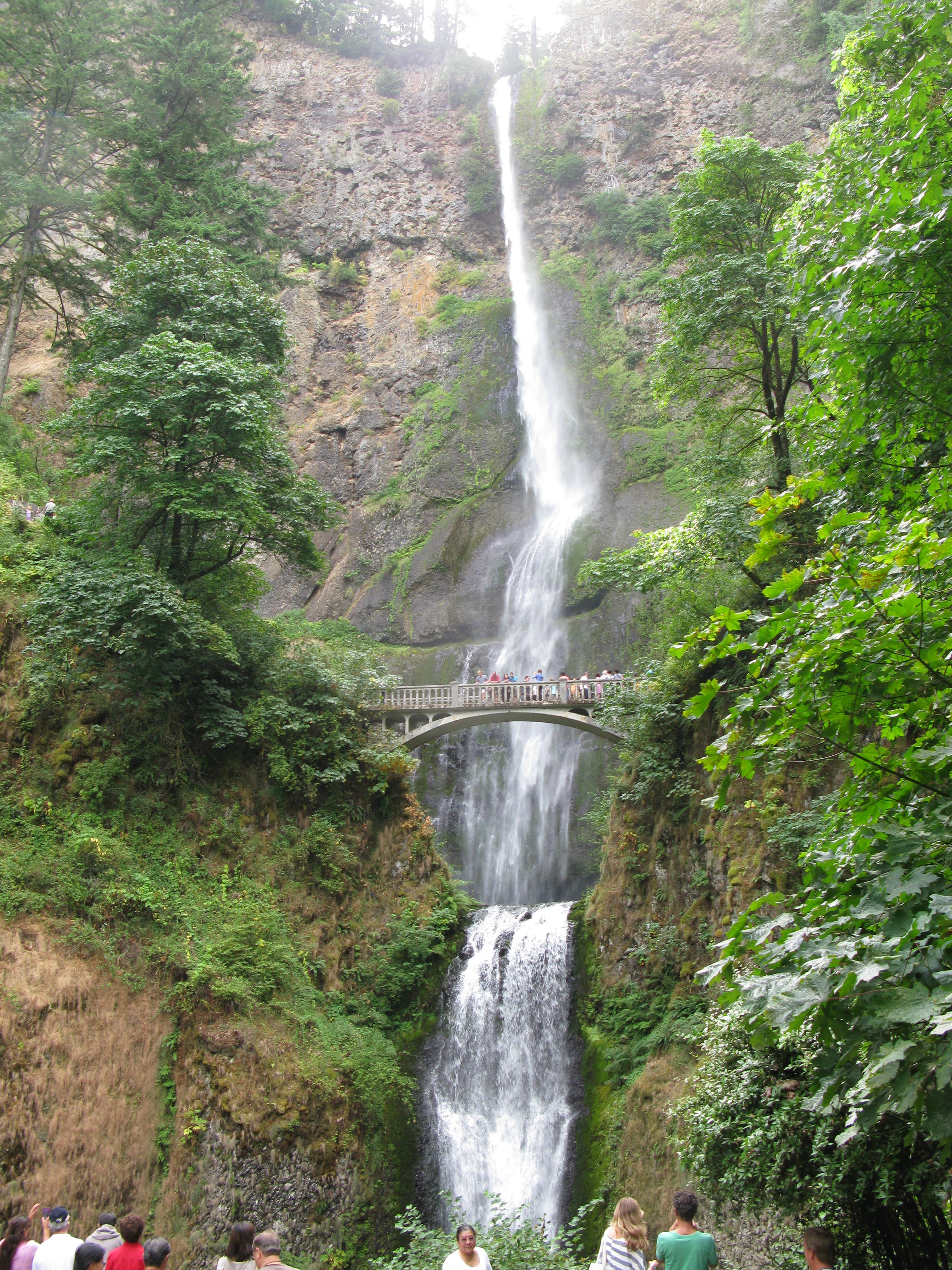 Much to our delight, we discovered a Pinot Gris with an aromatic bouquet and refreshing taste from a small Oregon vineyard, Cerulean.
This morning we babysat Eliot while his parents went out for a date. He was perfectly fine for the first hour, but then he became fidgety and before long he was waling. Nothing seemed to comfort him; he was not interested in a walk, nor had he any interest in food or drink. We finally realized that he needed a nap and after some resistance, Melanie was able to lull him to sleep. To the surprise of his parents, Eliot was still sleeping when they returned. Ethan remarked that we were pros. Little did he know! In the afternoon, we helped Ethan and Nicole transport some of their belongings to their new home. Melanie occupied herself with the kitchen while the rest of us hacked away at overgrown vegetation in the yard. Later we treated ourselves to ice cream at Salt & Straw,  a very popular place in Portland that serves fresh homemade ice cream with an eclectic array of unusual flavors, like strawberry and cilantro lime cheesecake, and goat cheese marionberry habanero. Melanie chose almond brittle with salted ganache, Nicole, sea salt with caramel ribbon, Ethan, strawberry honey balsamic vinegar with cracked black pepper and a second scoop of lavender honey, and I had a delicious pear and blue cheese ice cream.
This ice cream shop is just one of the many curious and interesting things I’ve noticed about Portland. As you may already know, medical marijuana is legal in Oregon and as we drive around town we’ve noticed several medical marijuana establishments. We drive pass one of these daily, Potlandia, that bills itself as a private social club where clients in need of medical marijuana can visit in a comfortable and welcoming environment. This is also a city of bridges. I’m amazed at the intricate interweaving of bridges suspended high in the air appearing to float over the waterways and the city below. Driving on these byways can be quite intimidating, particularly for someone like me who suffers from acrophobia, a fear of heights. Yet, if you are interested in panoramic views of the city, some of these bridges offer spectacular views. But watch out for the traffic ahead!! A safer way to get panoramic views is at the summit of the Rose Garden or a stroll along Terwilliger Boulevard, near the Oregon Health and Sciences University. Both places offer unimpeded panoramas of the city and of Mt. Hood, the latter being visible if there is no haze. And you are free to call me old-fashioned, but I am amazed how many young people tattoo themselves. Seemingly, every person under thirty has an ornamental tattoo, and often multiple tattoos covering large swaths of their bodies.
What also make Portland special are its ethnic diversity and the diverse character of its neighborhoods. Like any big city, there is the usual mix of upscale housing and modest bungalows dispersed across all quadrants of the city. But the attraction is found in city blocks grouped in districts where restaurants, brew pubs, specialty shops, boutiques, galleries and other small businesses abound. The ones I am familiar with, and have spent time in, are the Pearl District downtown near Powell’s, the Alberta District where La Petite Provence is and the Mississippi District where we had excellent margaritas at Por que No, a Mexican restaurant. There are many surprises in these pedestrian friendly districts. If you haven’t visited Portland, put it on your bucket list or happiness file.
I’ve also been impressed with the Catholic Church here. To my surprise the church bulletin of St. Rita’s parish contained an enclosure, “Campaign for Human Development,” a call for action by the U. S. Catholic Bishops for parishioners to contact their representatives and senators and urge them to support bi-partisan comprehensive immigration reform, to support the Supplemental Nutrition Assistance Program (SNAP), and to replace the sequester with a “Circle of Protection.” I’m wondering if the churches in South Bend are doing the same.
And before I close this missive, I must give multiple kudos to Portland; it has probably the best public transportation system of any US city that I’ve visited. In our meanderings about town, we have used the streetcar and the light rail system, locally referred to as the MAX. Their frequency and timely schedule, along with the city bus, reminds me of public transportation in France.
Although our main focus has been on Eliot, even swimming, we’ve managed to pack in a lot of activity.  And now that our visit is coming to a close — next stops Bend, Ashland, and then Northern California –, it is dawning on us how much we will miss being with Eliot. But that only means that we will visit more frequently. And I am sure there is more to discover in Portland where the sun shines more frequently than I admit. But don’t take my word for it, come and see for yourself; you’re in for a treat.
The City of Roses
August 8, Our Anniversary. After an exhilarating week with Randy and Chris in the beautiful Tetons Range, we headed to Portland, known most famously as the City of Roses.  They are everywhere to be seen in this northwest city, seemingly growing wild in scattered patches of earth, and ubiquitously present in just about every home’s garden. The Rose Garden in Washington Park has every imaginable color and variety of rose with its attendant aroma that offers a trove of pleasure to the senses. They bloom even in the most modest of gardens, giving the impression of hardiness with little need of care. In my own garden in Indiana, I struggle having a healthy looking rosebush. Perhaps this misty, cool climate is more conducive to their growth.
What I’ve noticed here is the lack of green lawns. Perhaps they can be found in the sprawling suburbs, but at least, here in the city, the small frontage plots are converted into gardens, or left to a natural state sans watering. Some of the lawn gardens are vegetable beds of tomatoes, squash, pumpkins, herbs, beans, even corn, and whatever else the homeowner wants to grow. Others are a mixture of vegetables and flowers.  Behind a wall of sunflowers in one garden, I noticed beds of vegetables.
Portland is also known for being ecologically friendly. Recycling is a big deal here. Bins and public disposal places make it easy to be environmentally conscious. Compost bins stand neatly aside trash and recycling bins — the smallest among them is the trash. Customers can redeem bottles and cans for cash. Farmer’s markets are plentiful promoting organic foods, and can be found in just about every neighborhood across the city. Healthy food is a by-product of this city that promotes healthy living. Community gardens can be found in many neighborhoods. It’s also a city of bicycles. Drivers are forever vigilant; cars politely yield to bicyclists and to pedestrians. Unlike in the Tetons, where bicyclists were out for the sport of it, here people are mounted on bikes mostly as a mode of necessary transportation. Just about everyone is riding toward a destination, some to work or shopping, others perhaps to a coffee shop to gather with friends. Few if any, appear to be riding recreationally, except in the evenings, when families are seen enjoying casual rides.
The city’s moniker may be roses, but craft beers clearly define the city. Brew-pubs are seemingly as omnipresent as the roses. I’ve traveled to Portland numerous times since the early nineties and with each visit enjoy tasting a new craft beer with my stepson who is quite knowledgeable about beer and who, on occasion, has made some tasty homemade brews. It is he who introduced me to the Deschutes Brewery’s Black Butte Porter. Normally, I am not drawn to porters, — I prefer lagers or ales — but this one is not heavy; and as porters go, it pleases while still retaining its hoppy, chocolate taste. I’d relish the idea of pub hopping with several of my faculty colleagues who are craft beer aficionados. I’ll be bringing a couple of cases back to Indiana and can invite them over for a tasting.
Portland’s less glamorous aura is its homelessness. I’ve always been astounded by the number and visibility of homeless people roaming the streets. It’s a problem that the city has been battling for a number of years. A former mayor pronounced an end to homelessness within ten years; and now that timeframe has passed, the problem persists. There are many anecdotes as to why Portland is attractive to the homeless — mild weather, good social services, acceptance and tolerance among the local population. But that broad-mindedness is rapidly shifting as the city desperately tries to move the homeless off the streets. A recent article by a weekly newspaper highlights the current situation. Although life circumstances took an unfortunate turn for some, surprisingly, the homeless lifestyle is a choice among many.
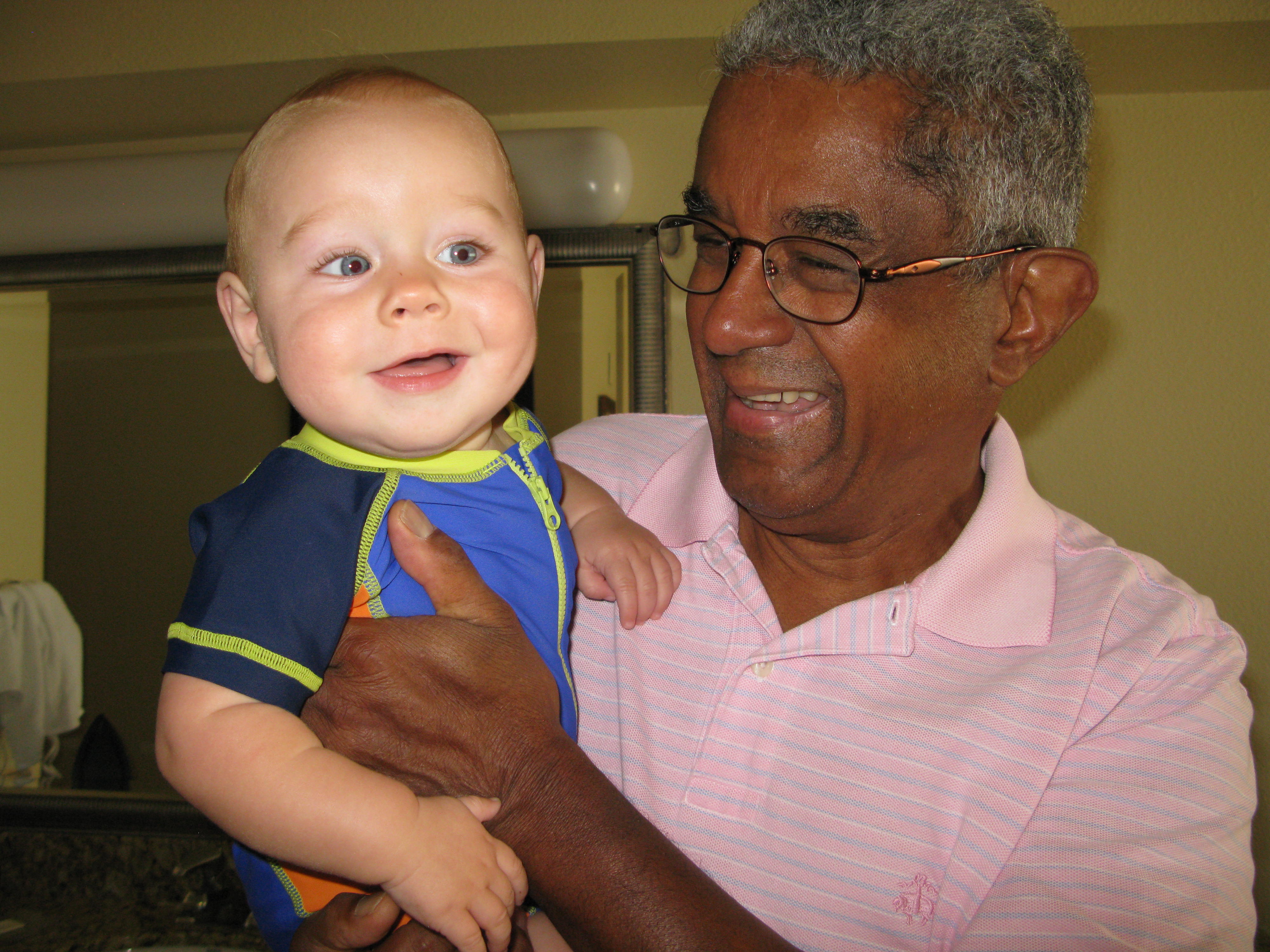
These impressions of Portland aside, the main purpose of our visit is with the new Bendotoff-Smith family addition, grandbaby Eliot, six months old. 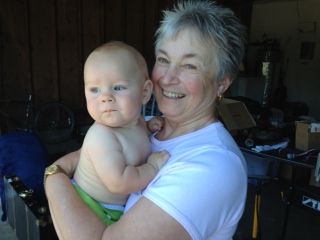 We arrived last weekend and on Sunday attended an outdoor symphony concert in the Rose Garden of Washington Park. The widely attended event was part of a two-week celebration of the arts. We picnicked on the grass with Nicole’s parents from Palo Alto, Ethan and Nicole, a friend of theirs, and Eliot. The rest of the week was spent visiting with Eliot and his parents. Melanie and I have enjoyed walking Eliot around the neighborhood in his stroller. He’s a beautiful baby with big blue eyes that light up his face. He is curious about everything around him. Melanie says he favors Ethan, his father, as a child. Today, he focused attentively on a squirrel scurrying along a telephone wire. In moments like this, it is difficult to distract him. For Melanie and me, it’s been fun observing Ethan and Nicole as parents. They have slipped naturally into parental mode and are doing very well as doting parents. And like every new parent, they are sleep deprived. Little Eliot likes to stay awake at night.
Earlier in the week, we all spent an afternoon cleaning Nicole’s and Ethan’s new home, a fixer-upper that has charm and potential. That evening I cooked a pot of shrimp creole to the delight of all. Satisfying our culinary palates has been de rigueur at each of the stops on our cross-country journey. It was a good excuse to dine out on Thursday evening, at a neighborhood Spanish restaurant, Cabezon, for a three-fold celebration – Nicole’s success on her oral midwifery exam, Ethan and Nicole’s new home, and our fifteenth wedding anniversary. Each of the dishes was beautifully presented; no doubt enhancing its flavor. My meal of monkfish was absolutely divine. This morning, Melanie and I breakfasted at our favorite French restaurant, La Petite Provence, in the Alberta district, an artsy up and coming area in northeast Portland. With our coffees and croissants – made only as the French can –we shared a dish of Eggs Provencal, poached eggs on a half-tomato covered with an herbed pesto sauce. As the French would say, suberbe! There’s no second-guessing that we will return before leaving.
A highlight of our Portland stay was the visit to the home of a friend, Pam Montgomery, from SVHE, the Society for Values in Higher Education. She describes her house as a tree house. Indeed, there are steep stone steps to mount, but the view of downtown, the Willamette River and the mountains is exhilarating. Built by her great grandfather at the turn of the last century, this home with its warm exterior color has a Monet-styled garden. Walking through the gardens was akin to walking through separate rooms of a home, each section at different levels defined by a particular color scheme and texture. Water features in several nooks mimicked the music of gentle flowing streams. Tucked away along the paths were statuettes of Asian foo dogs and ceramic pots. 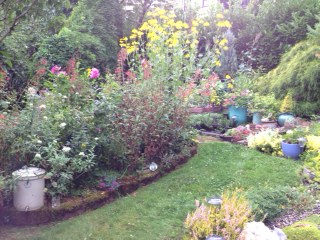 A seating area under a vine-covered pergola housed a dragon placed there by her great-grandfather; there her extended family gathers annually for a dragon ritual in his memory. After a tour of the garden and the home, we sat on the veranda overlooking the city for dessert – sorbet, pastries and port wine. Pam is a connoisseur of port. We appreciated hearing stories of generations of family history. The maternal side of her family stretches back to pre-Civil War times in New Orleans. The family home was located on Dauphine and Royal Streets. I now have another connection to my beloved city.
And what would a visit be without spending a couple of hours at Powell’s, the large multi-level bookstore downtown that is as much a landmark for Portland as Mt. Hood! And if you are as much a book-lover as I am that means you won’t be leaving empty-handed. In addition to the new novel by Chimamanda Ngozi Adichie, Americanah, a view of race and America through the eyes of an African, we bought two French children’s books for Eliot. In fact, Melanie and I have been speaking to him in French; he listens attentively, and sometimes smiles.
August 13. An early morning rise and walk through the Rose Garden was a perfect complement to a beautiful sunny day. We got there before hordes of bus tourists descended on the gardens enabling us to casually stroll among the multi-colored forest of fragrant roses.  We spent about two hours there admiring and studying the rose bushes, the rose trees, the climbing roses. It’s like being in rose heaven. A lunch appointment at noon with another friend from SVHE pushed us out of the park; otherwise, I could have spent the entire day there. Hopefully, we’ll get a chance to return to see the Japanese Garden, one of the best, I’m told, outside of Japan.
The rest of the afternoon was spent with Eliot as we strolled him around the neighborhood on his six-month birthday.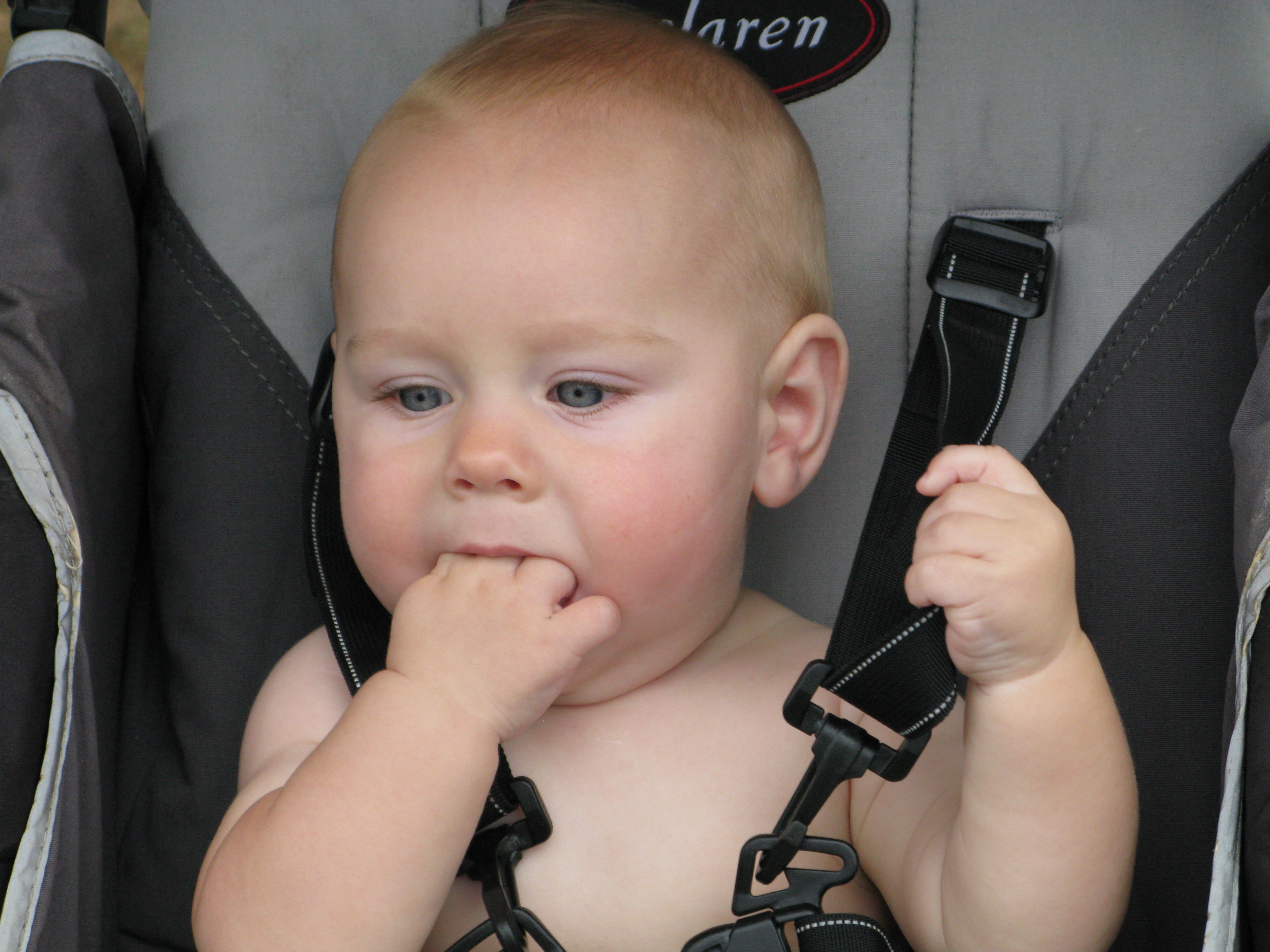
Photo Addendum to Tetons/Yellowstone
Randy and Chris’ home in the Tetons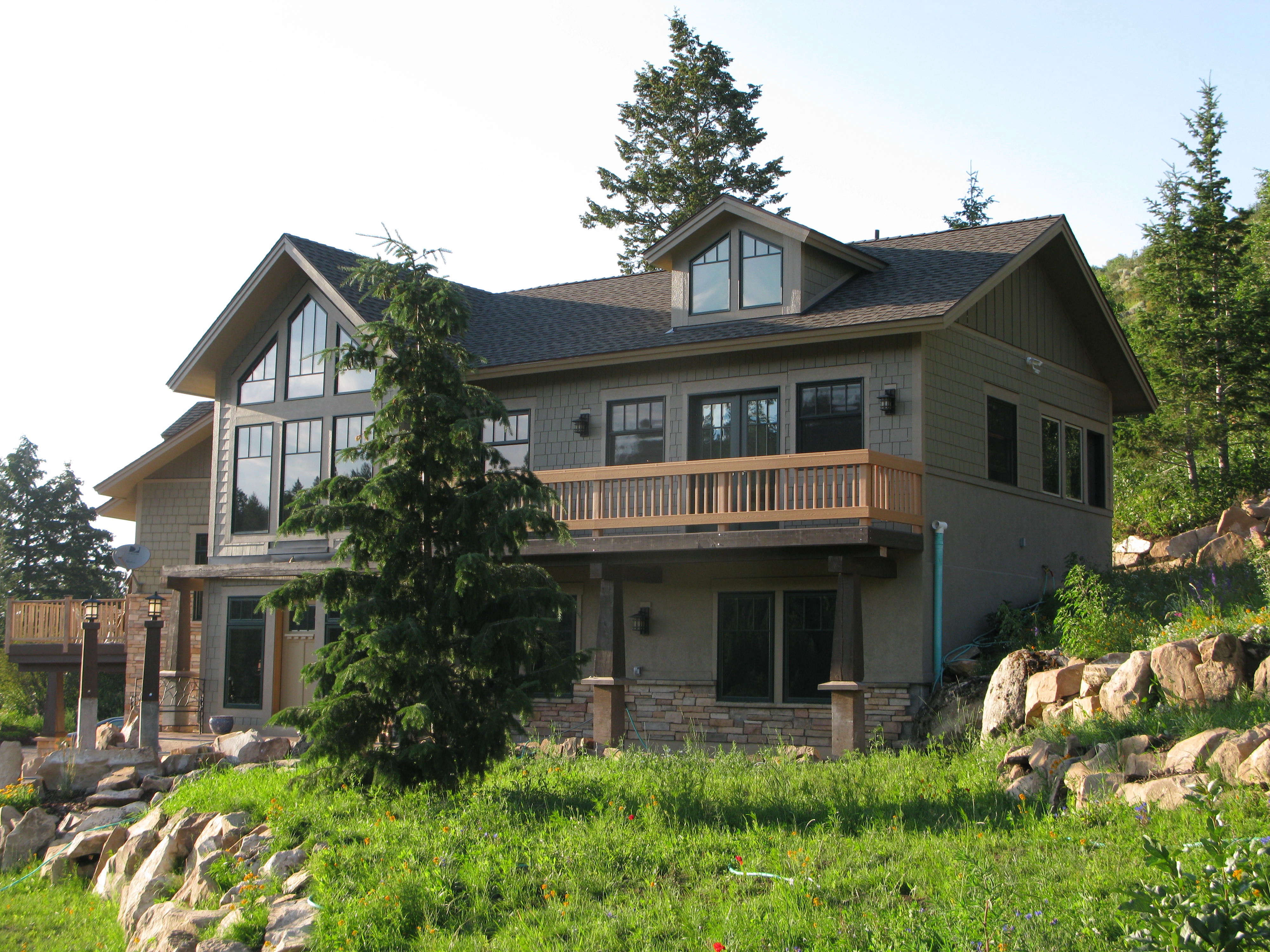
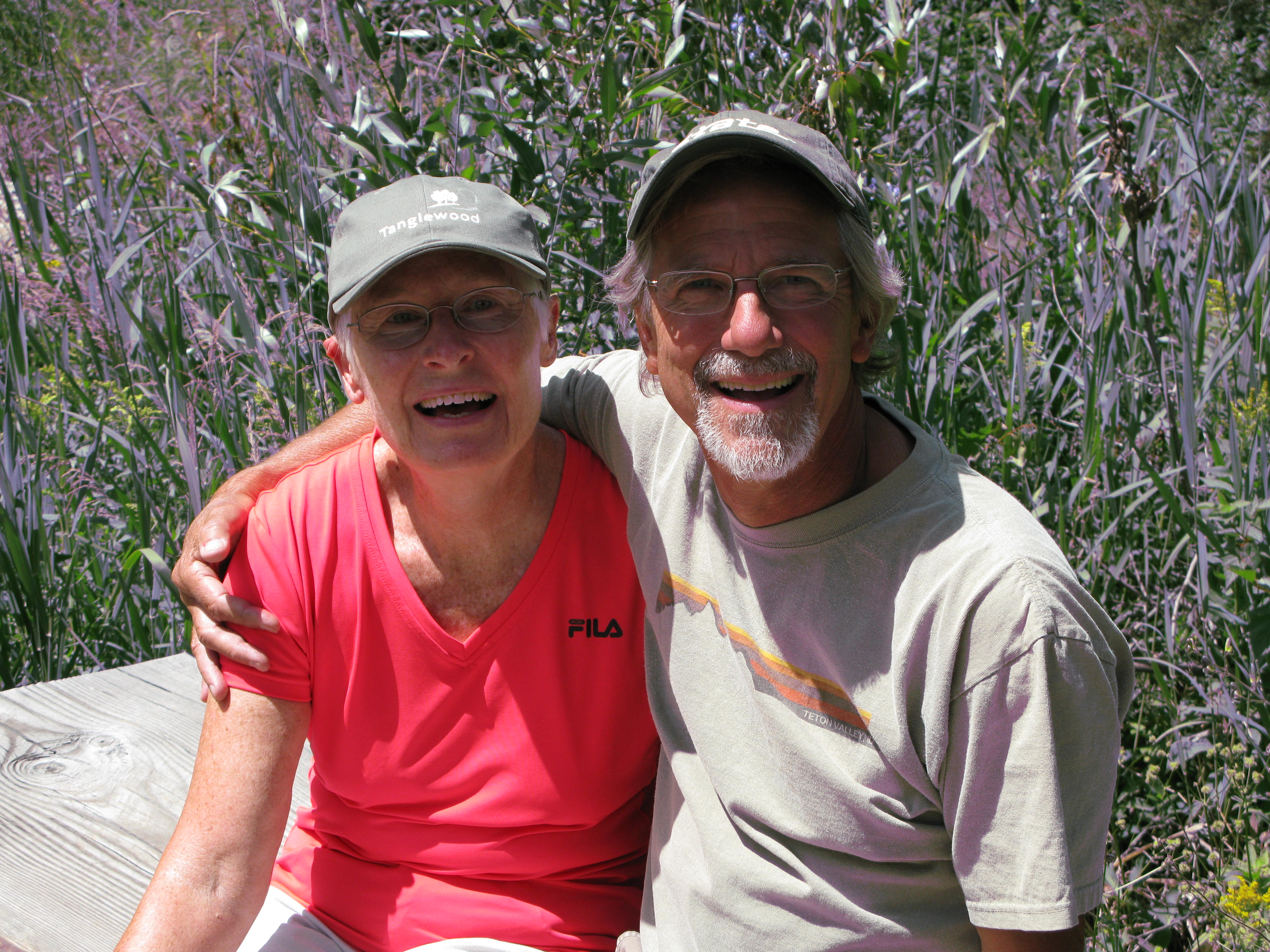 Chris and Randy
Randy Watering His Wildflower Garden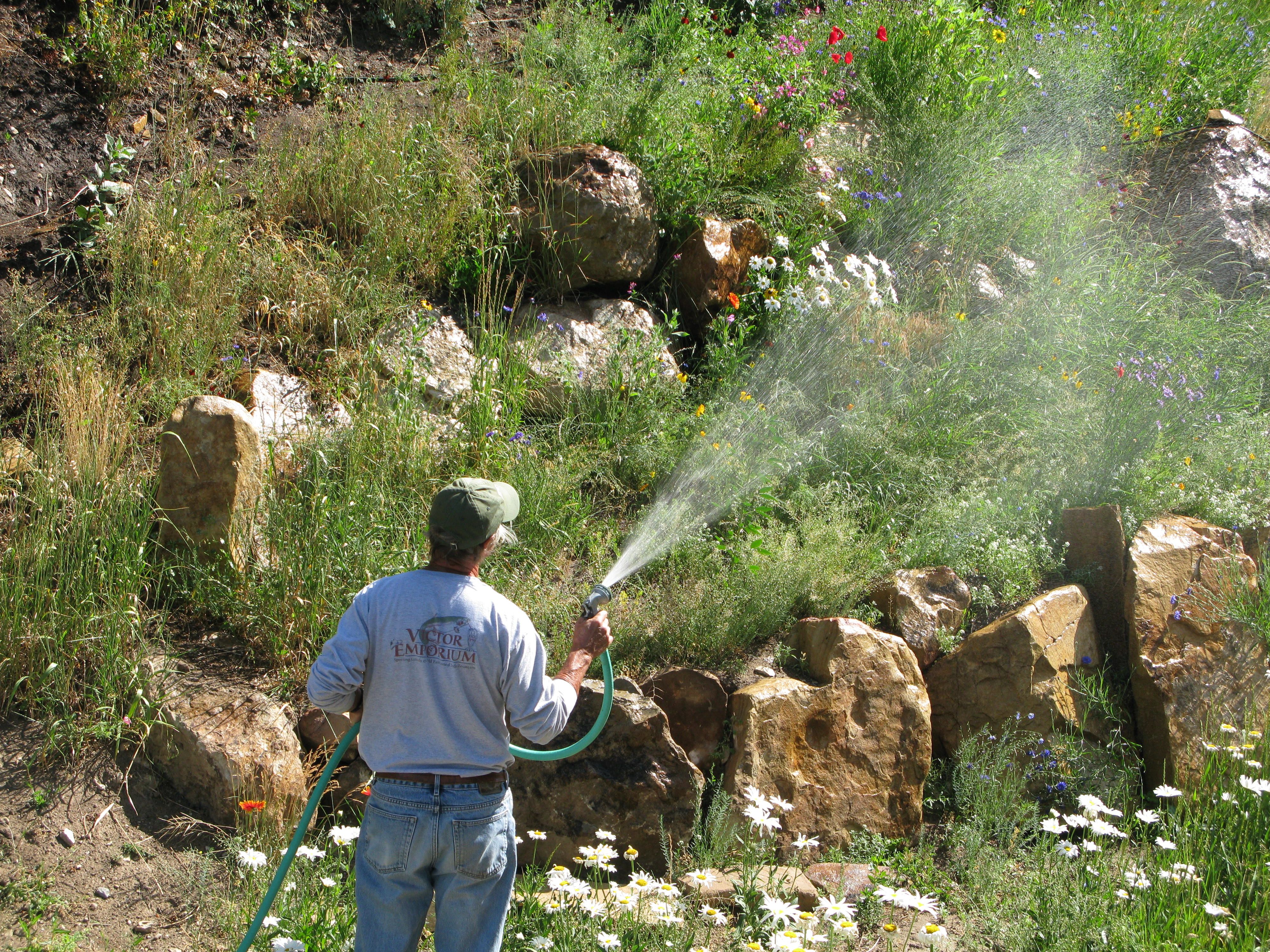
Alfred and Melanie at the Grand Canyon of Yellowstone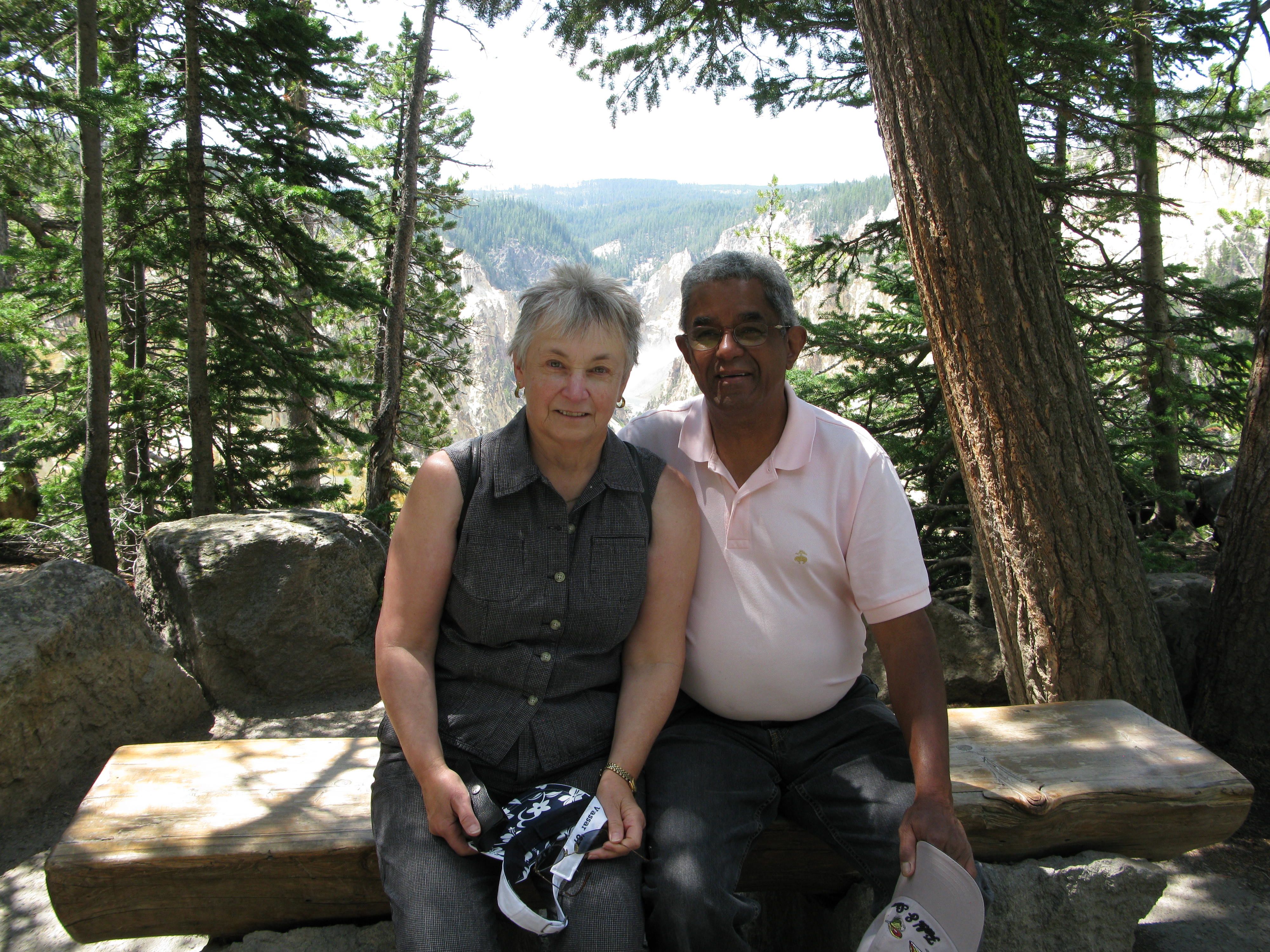
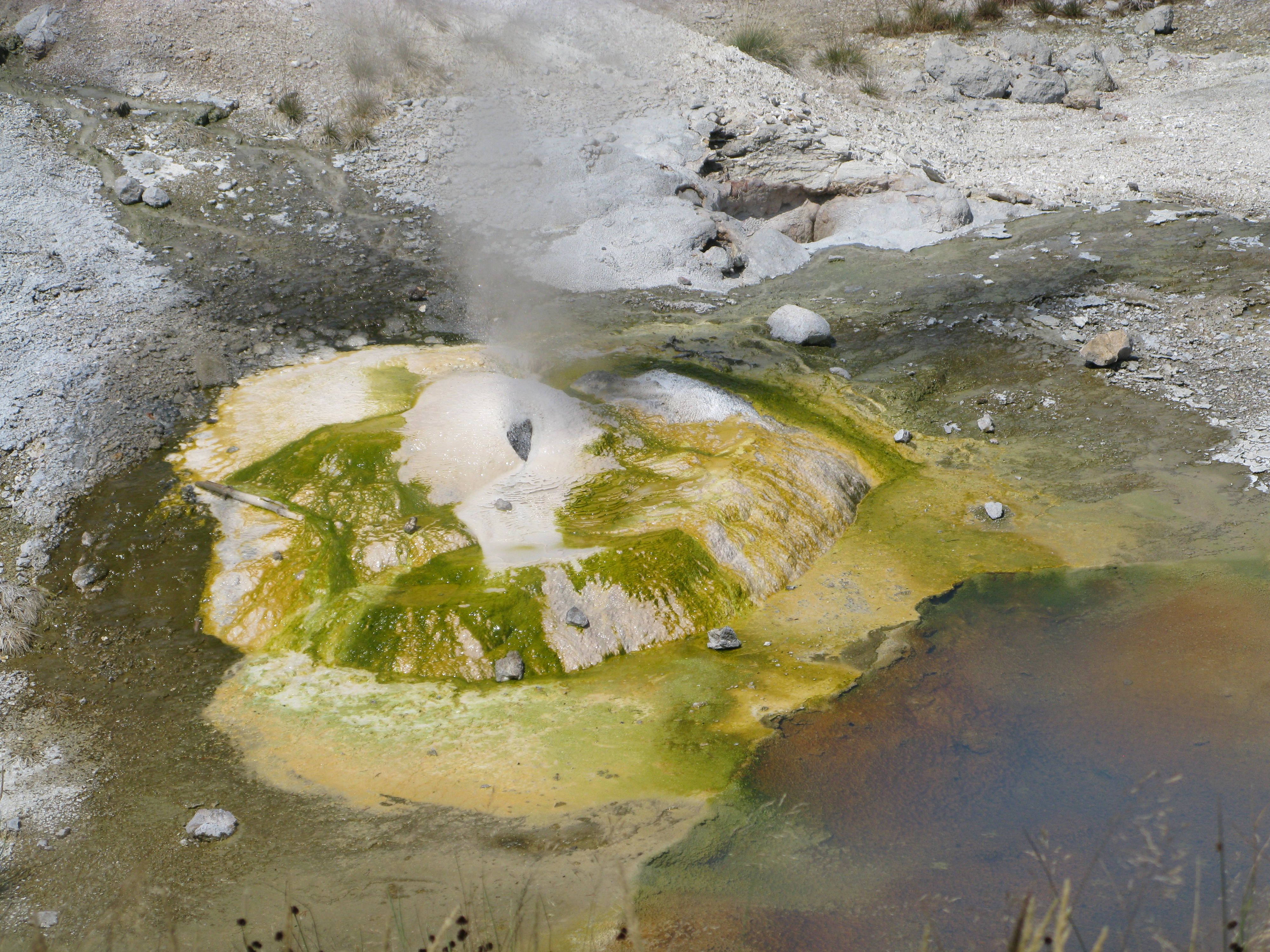
Mudpot (Geysers)
Buffalo on the Plains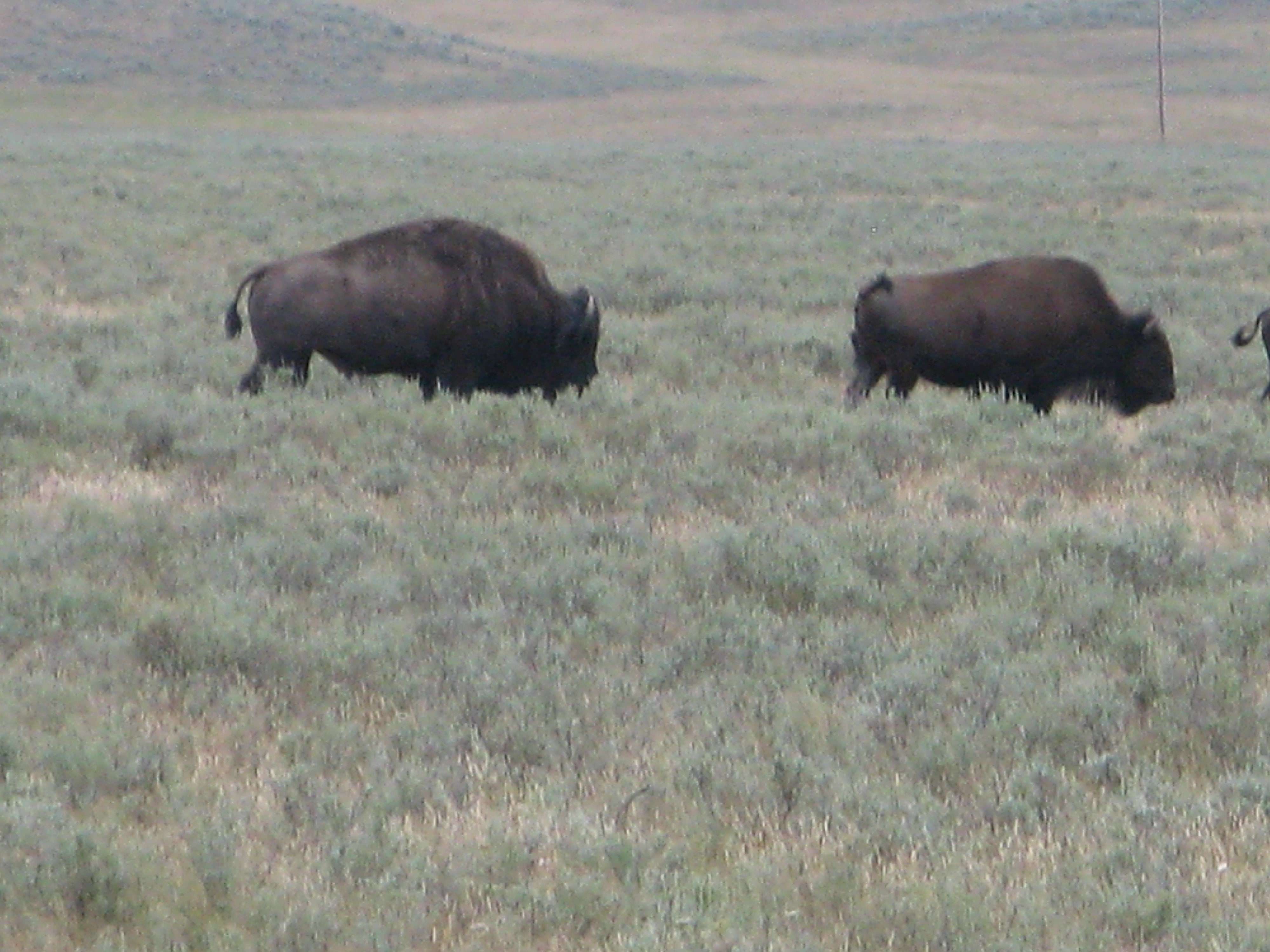
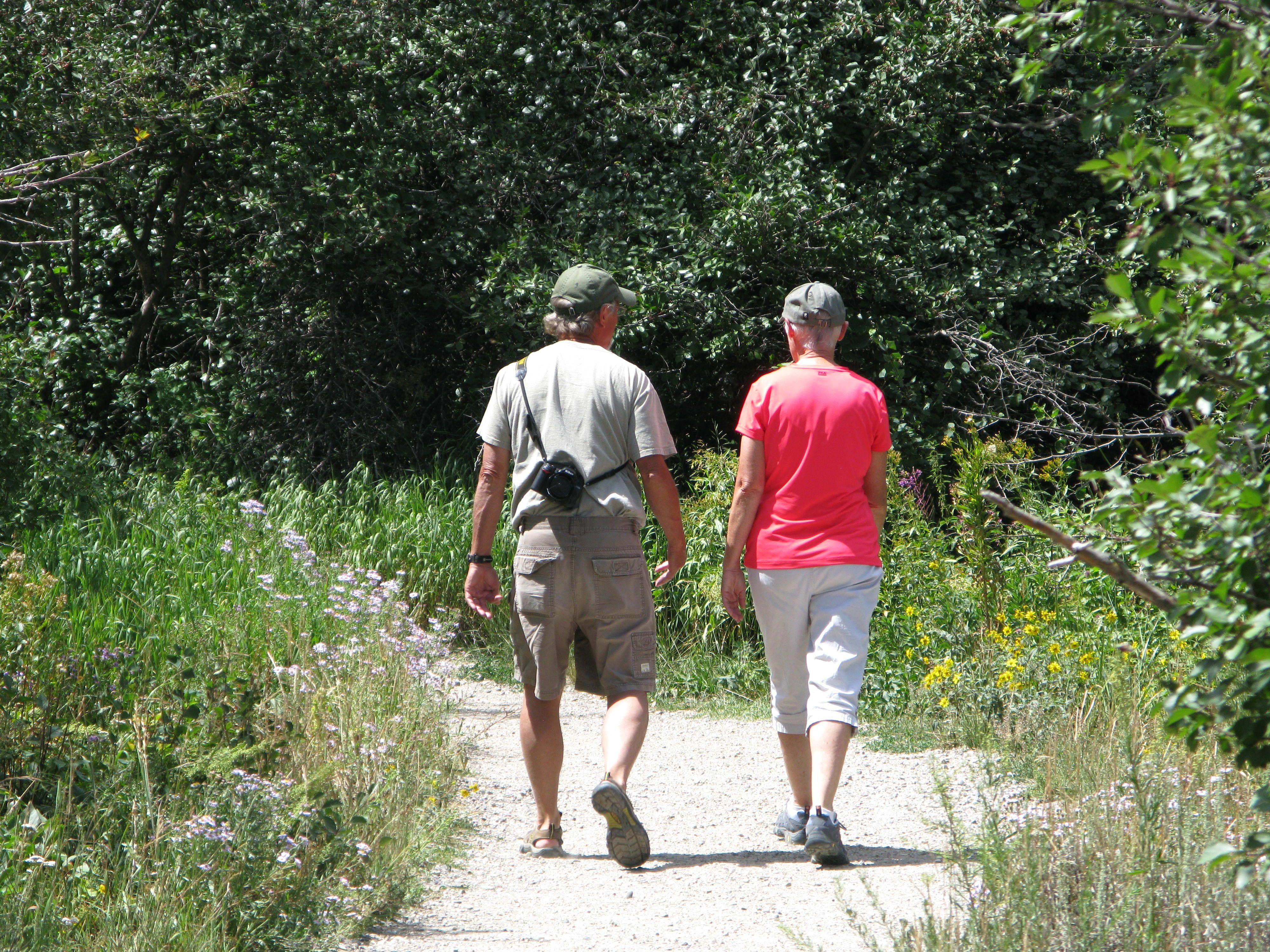
Walk in Laurance S. Rockefeller
Preserve
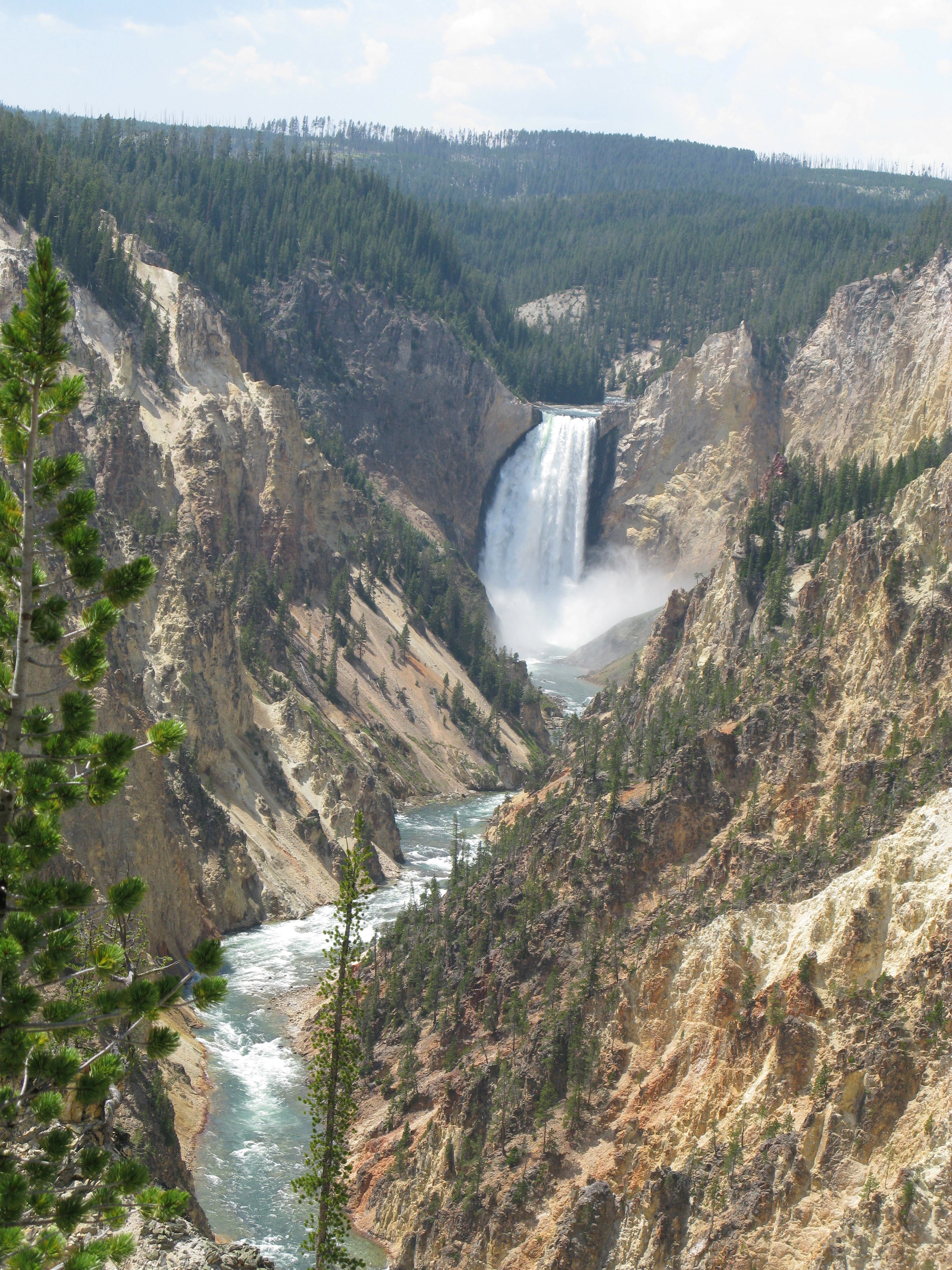
Grand Canyon at Yellowstone
- Old Faithful Bubbling
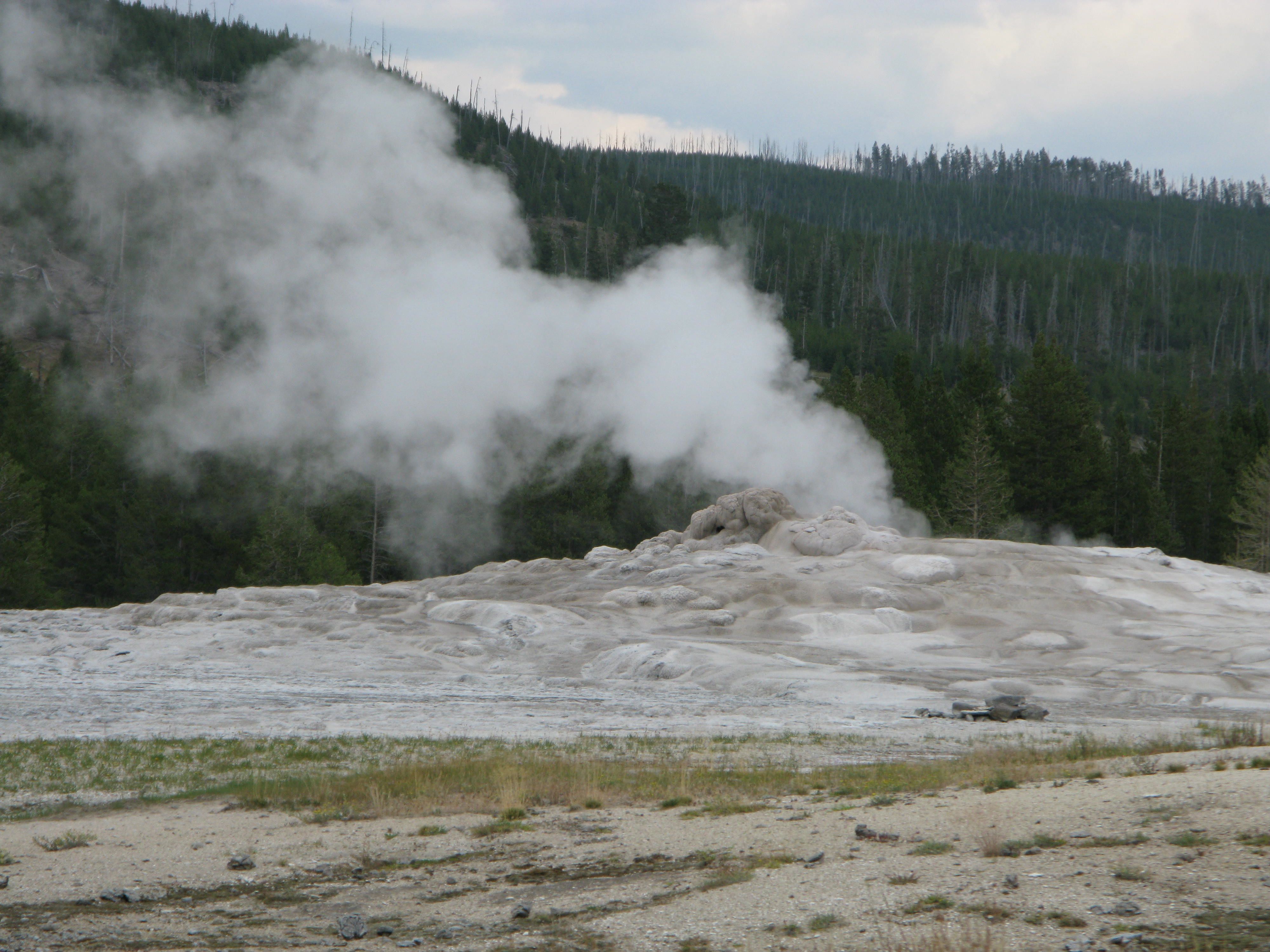
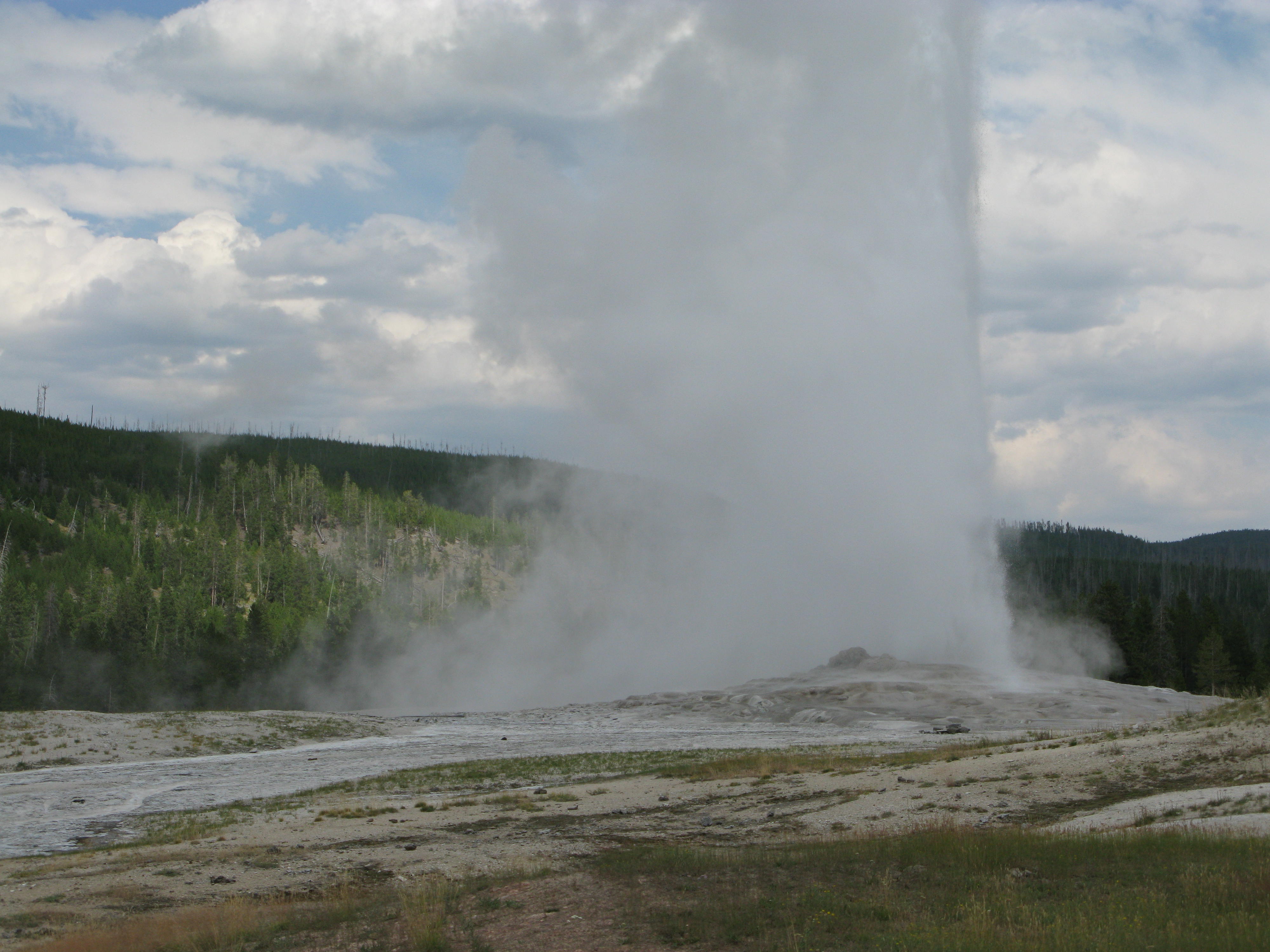
Old Faithful Exploding
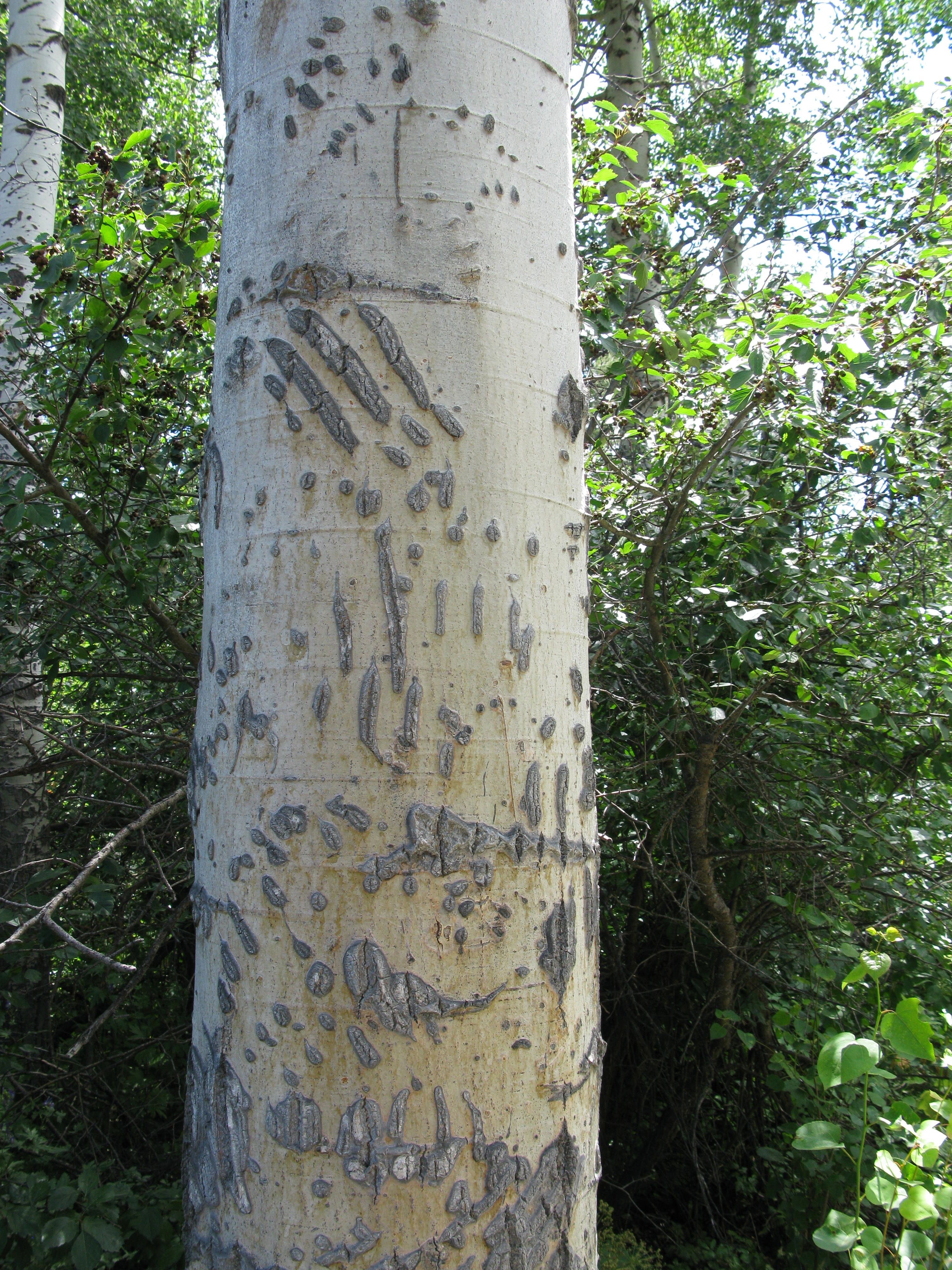
Bear Claws on Tree at Rockefeller Preserve
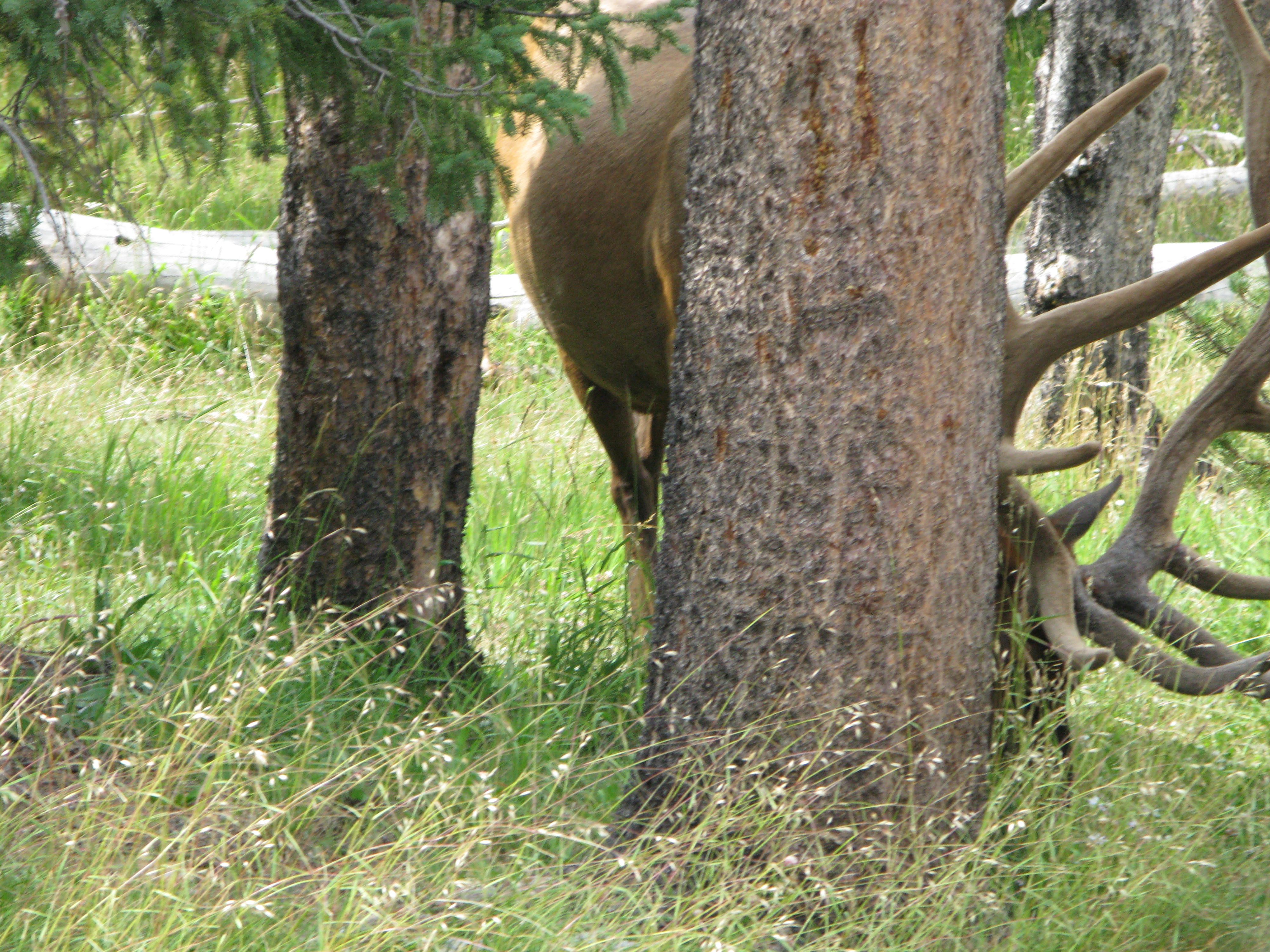
Elk Scratching Against a Tree

Beautiful Scenes of the Tetons Range

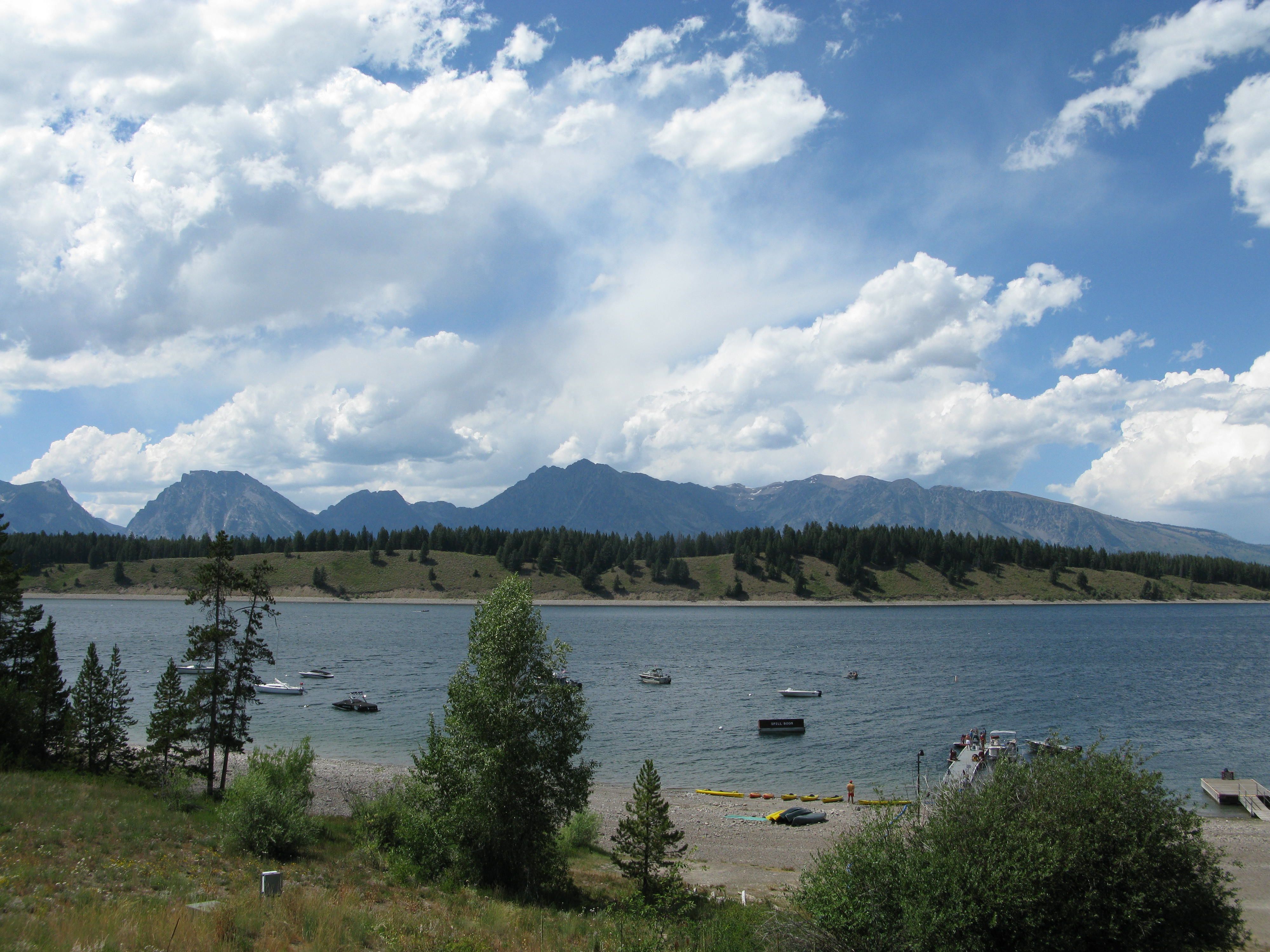
Stillness.
Wholeness.
Renewal.Terry Williams)
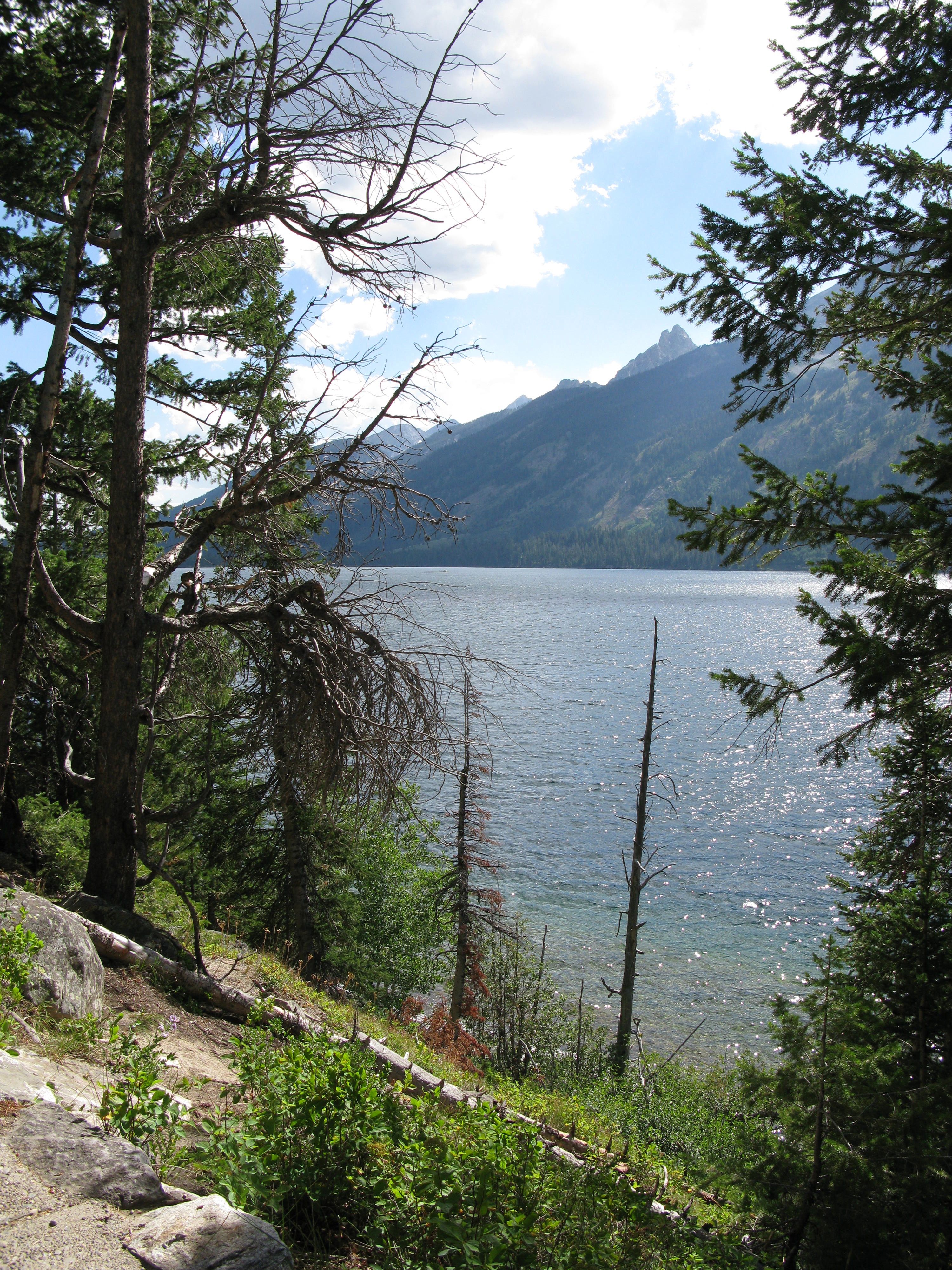
Reflection Leads us to restoration. (Terry Williams)

We see the Great Peaks
mirrored in water-
(Terry Williams)
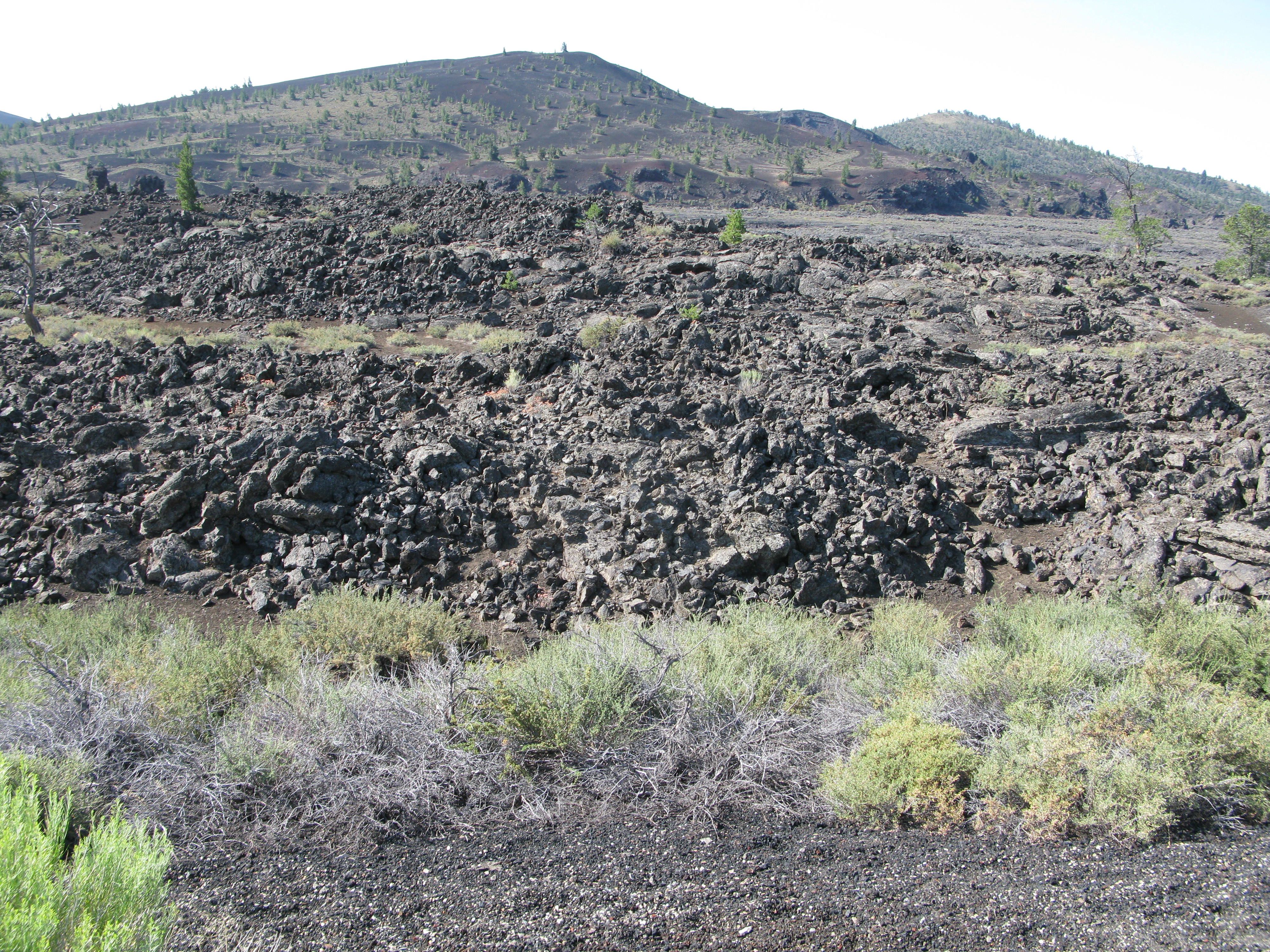 Craters of the Moon
Stunning Yellowstone
August 2. “Stunning” was what Randy came up with when he and I were searching for one word that encapsulates the awe and beauty of Yellowstone. Melanie and I had never been to Yellowstone and Randy and Chris were eager to share with us the magical realism of this natural wonderland.  Ah! It takes little imagination to figure out why they chose to retire here on this southeast corner of Idaho, a stone’s throw from Jackson, Wyoming. On Wednesday morning, we jumped into the jeep and headed off on a three-hour journey. We sped merrily along curving hills enveloped by quilted patches of pastel yellow fields of hay and potatoes. Neatly ordered bales of hay lined the fields, the work no doubt of hearty and rugged farmers. The effect of these blended yellow hues was like an Impressionistic canvas. The landscape of this beautiful country naturally attracts people who love the outdoors. Bicyclists, for example, are everywhere — on the plains speeding easily along; in the mountains, some struggling uphill, others racing downhill, bike enthusiasts, all of whom enjoy the camaraderie of the sport and who, I imagine, get high on the euphoria of being mentally and physically fit.
Deep within Yellowstone, emerge hordes of tourists, each one like us, seeking some splendor of nature’s beauty. Global languages abound – French, Spanish, Japanese, Chinese, Italian, German, unidentifiable Slavic languages, and British accented English. The world has come to this territory, bigger than Rhode Island, to gape in awe, like us. The intended or accidental effect of this tranquil and serene beauty is nourishment for the soul. Sitting among the crowd of strangers, waiting anxiously for the eruption of Old Faithful, the geyser, so nicknamed because of its faithful hourly gushing, was akin to sitting in a cathedral, except instead of being ensconced in the spiritual warmth of architectural icons and stained glass windows, we were enveloped by nature’s splendor. And Old Faithful did not disappoint! 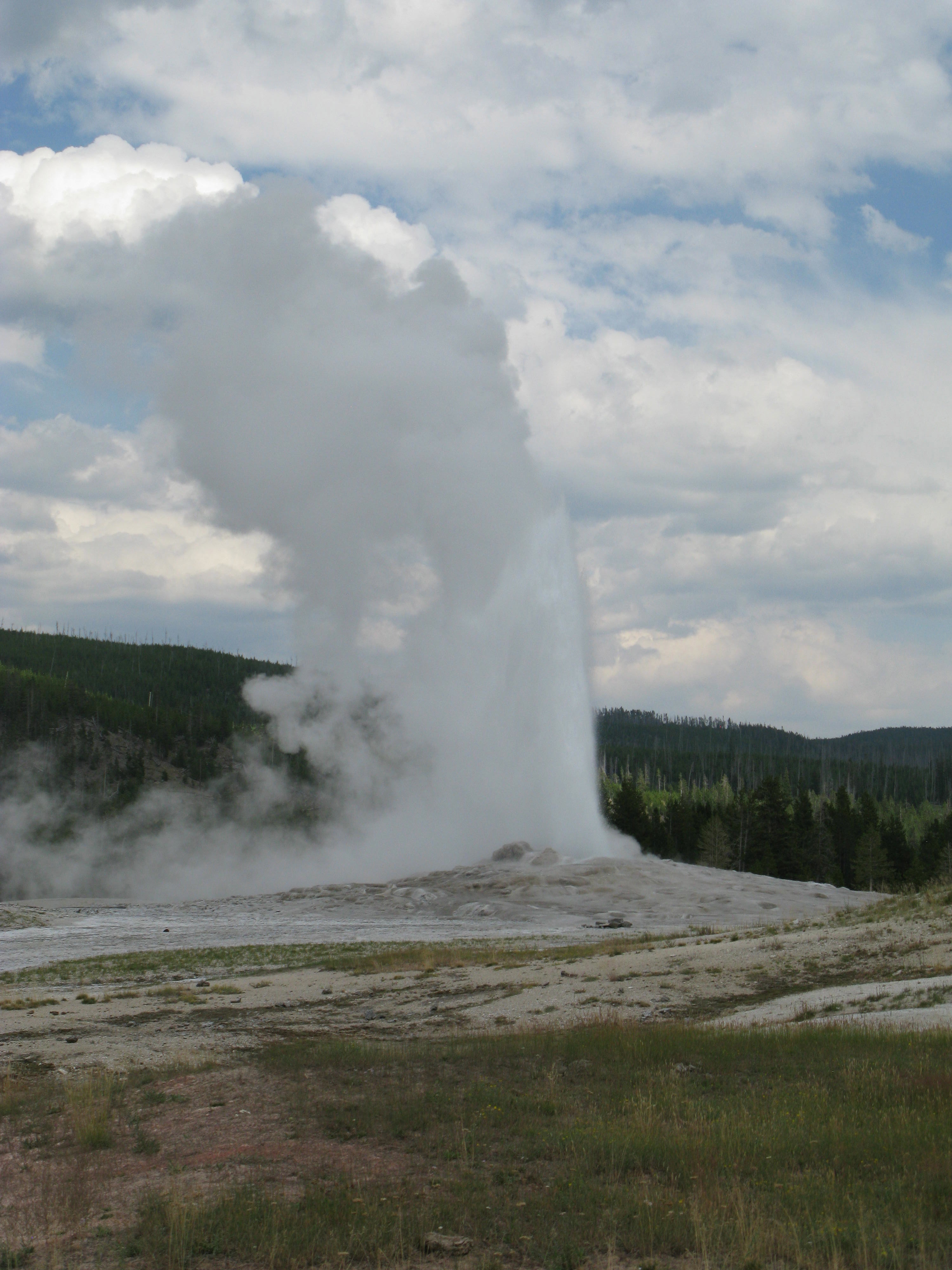 At the expected moment, a small gush of bubbling steam slowly ascended followed by increasingly massive eruptions that ascended skyward for dozens of feet. Quite a spectacle to behold! Other special moments included watching the cascading waterfall of Grand Canyon. At an elevation of over six thousand feet we stood and watched the cascading waters flow with a mighty force between the fissures of yellowed rock. The thunderous crashing water coupled with the whistling wind of the trees made a symphony of sounds. And for those fascinated with chemical reactions, the visit to the hot springs and mud pots with its oozing colors of violet, orange, black, yellow, blue and pink did not disappoint.
  Though the strong stench of sulphur encouraged a brisk pass through, everyone lingered, admiring the myriad colors of nature’s palette that this siliceous sinter – whitish rock– created.
Nestled among the forest of pine trees are rivulets, streams, lakes and rivers — like the Snake and Madison — that meander for long distances throughout Yellowstone. We had a picnic lunch on the skirts of the Gibbon River. Sitting on fallen logs, we enjoyed the melodic flow of clear water over beds of rock. Later in the evening we dined at the Old Faithful Lodge built during the 1920s as a haven for the wealthy. The architecture of this massive inn built with logs is fascinating. On Randy and Chris’ bucket list is a dinner and overnight at each of the country’s fourteen grand lodges. After visiting Yellowstone and the Tetons, I am tempted to add the same to my happiness file.
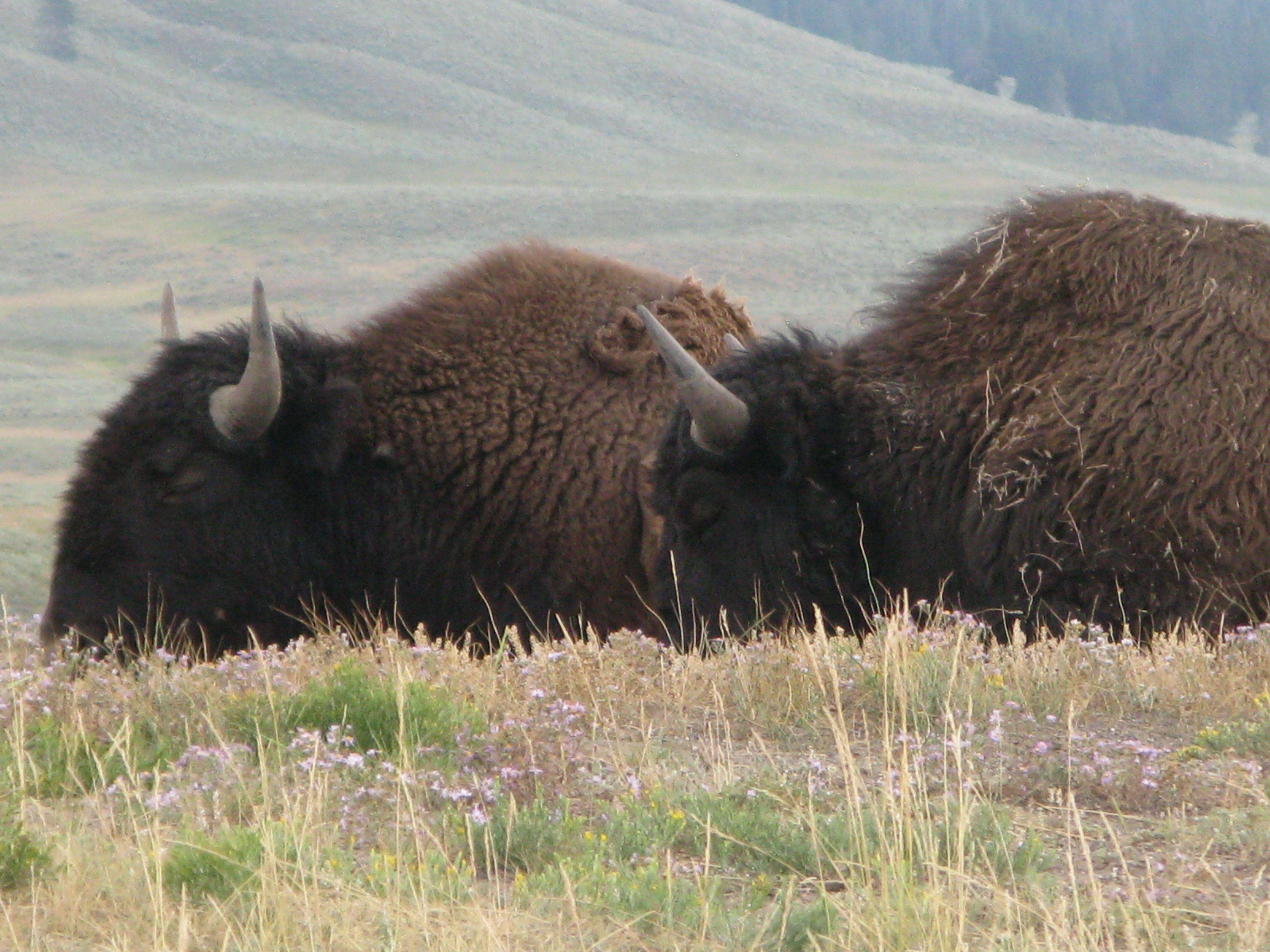
Our day could not have ended more perfectly with the herds of bison roaming the plains. We stopped by the side of the road as they ran freely. Their lithe gait seemed at odds with their huge bulk. We saw mothers with their young. Others were at play. And as we continued our journey, we saw bison slowly crossing the highway oblivious to the traffic jam and gazing tourists. A ranger standing in the middle of the highway was carefully observing the scene, assuring no contact between beast and human. As our car passed, we were able to get within close proximity to those lounging along the edge of the road.
 August 3. After a slow start to the morning, we explored the Tetons more intimately. The Tetons are beautiful, majestic mountains formed by two seismic plates rubbing against each other millions of years ago, one bolting upright to create eastern vertical face of the Tetons; the other, jutting downward to create a string of lakes and the valley floor on the eastern side. French trappers gave it its name because the three peaks resembled teats. The eastern side is more dramatic with its towering appearance that shoots up directly from the lake; the western side has a softer, more sensual appeal with its sloping hills. Either view stimulates the imagination. Perhaps the most memorable part of our visit to the Tetons was the Laurance S. Rockefeller Preserve, formerly a vacation retreat for the Rockefellers. On the site is a LEED platinum certified educational center and museum where visitors can learn more about the park’s wildlife and natural habitat. Unique to this center are the meditative rooms where we sat quietly listening to nature’s music — the whistling winds, the rustling of leaves, thunderstorms, the chirruping of birds, cascading waters, or the vocalization of four-legged creatures like Elk or the Grizzly Bear. The experience was spiritually uplifting. There were also educationally artistic videos to watch. On the walls were stanzas of a poem by Terry Tempest Williams. One stanza that particularly appealed to me was “Nature quiets the mind/by engaging with an intelligence larger than our own.” We lunched later in the day en plein air at the Signal Mountain Lodge in full view of the Tetons.
After lunch we visited a quaint little Episcopal Chapel of the Transfiguration 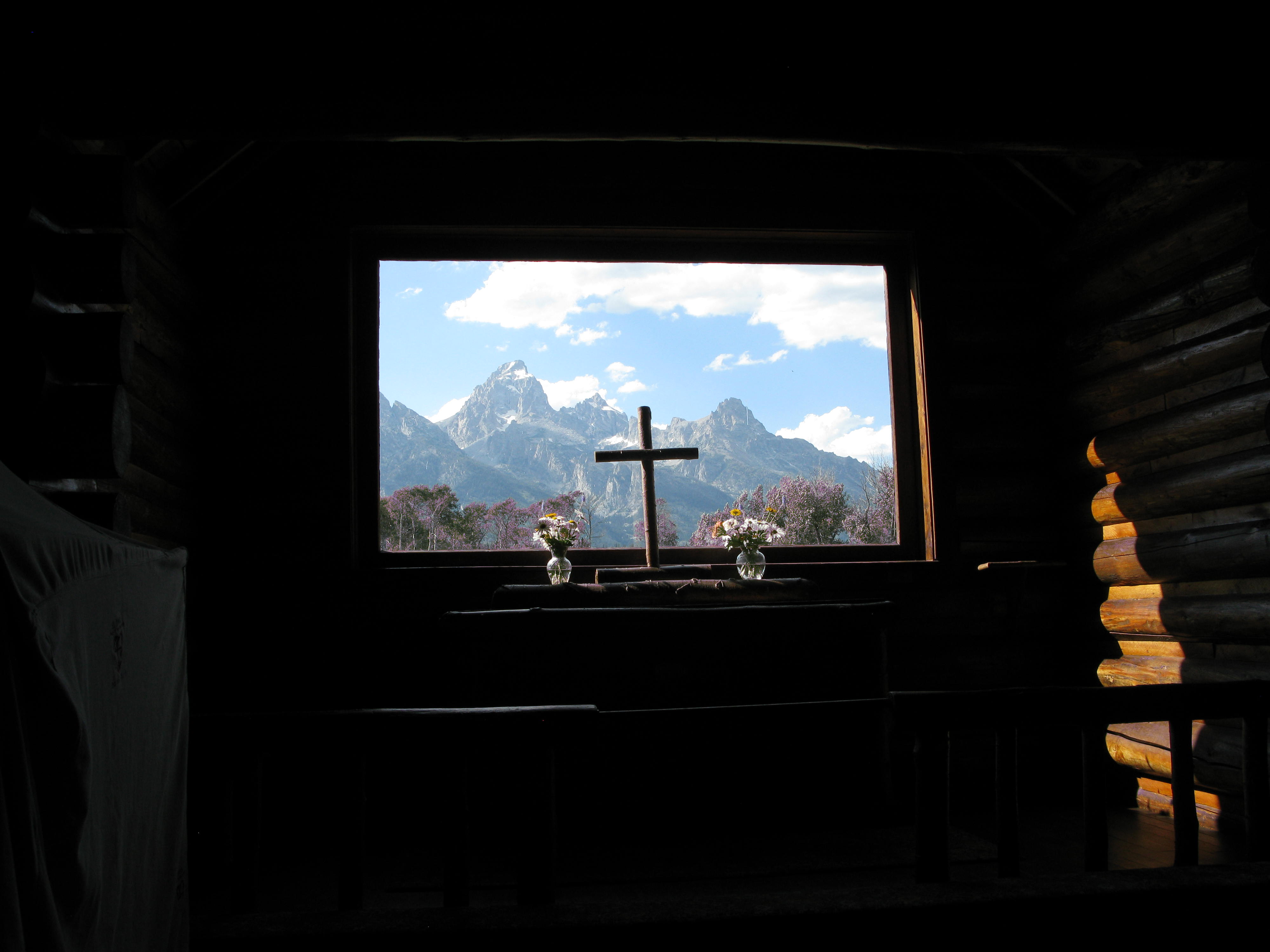 whose small window in the sanctuary framed the Tetons. Later in the evening, on our way home, we could not resist stopping to watch the sunset over Mount Moran, mirrored in the lake below.
On Friday, our last day in the Tetons, we relaxed in the morning, picked weeds in the garden with Chris while Randy watered his beautiful wildflower gardens. In the afternoon, we visited downtown Victor for Huckleberry shakes, a local cultural treat that cannot be missed. And to round out the day, Randy and Chris invited us to the town’s weekly winetasting at Alpine Wine and Bistro in Driggs, a neighboring town. The proprietor, a friend of theirs who lives just up the slope above them, was expecting us. Since Randy had alerted him that we were former French professors, he was eager to learn the proper French pronunciation of the five featured French wines. Each of the wines was quite good, offering different sensations to the palate; the least favorite was the Sauvignon Blanc. Melanie and I have found no equal to New Zealand’s Sauvignon Blanc. Entertainment was provided by a father-daughter duo; he played the keyboards and the harmonica and she sang with a mellifluous tone. I would love to hear Jeff Jones, who plays a really soulful harmonica, and this fellow in a harmonica duet. The ambience, and perhaps the wine, made our feet light as Melanie and I danced a rumba, a tango, a bolero, and a swing. Though we felt we were a bit rusty, we received several compliments. Our teacher, Jan, at Dan O’Day Dance Club, would have smiled gleefully. In spite of the temptation to dance the night away, we didn’t linger and went home early; a thirteen-hour drive to Portland awaited us in the morning.
Instead of taking Interstate 84, presumably a quicker route to Portland, we opted to take the scenic drive along Route 20 through the Snake River Plains and eventually to Craters of the Moon, an area of dark craters and cold lava from eruptions that occurred nearly two thousand years ago. The blackened, scorched earth was a stark contrast to the rich vegetation of the Tetons and Yellowstone National Park.  Once past the Craters, the topography remained dry and desolate until we reached the Columbia River on our approach to Portland where once again we were feted with the sight of deep dark green trees.
 Alfred Guillaume
Recent Comments